The Diploma Programme for Managers in Public Transport will take place in September and November 2026, and in June 2027.
It is an expert-level year-long course composed of three modules taking place in three different cities. It includes additional online sessions (webinars) organised between the classroom modules and an urban mobility lab.
What You Will Learn
Expand your knowledge and understanding of global mobility issues.
Gain insights into the primary challenges within the sector.
Analyse and discuss the latest trends and developments with experienced public transport experts and professionals.
Cultivate an international network of peers and professionals.
Facilitate the exchange of experiences among your peers.
High-potential managers responsible for administration, operations, or maintenance.
Professionals seeking a broader international perspective on the public transport sector or those new to it.
Individuals eager to learn from peers and contribute their knowledge and experience.
Modules
Module 1: Policy, Planning, Regulating and Funding
14-16 September 2026 London (UK) Local Host: Transport for London (TfL)
Module 2: Public Transport Modes & Modal Choice
23-26 November 2026 Istanbul (Türkiye) Local Host: Metro Istanbul
Module 3: Customer-Oriented Management
9-11 June 2027 Hamburg (Germany) Local Host: Hamburger Hochbahn
Programme
Introduction to Diploma Programme & Expectation Analysis by UITP
Session 1
Cities are facing challenges such as congestion, pollution, and safety issues resulting from rapid urbanisation and car dependency.
Decision-makers must now confront the consequences of 70 years of car-oriented urban development and address the major challenge of changing behaviour, slowing urban sprawl, improving air quality, and ensuring that today’s investments deliver positive effects in 30 years’ time.
On a positive note, many city administrations have reviewed and revisited their urban and mobility plans to ensure that urban and infrastructure development advances towards climate targets while maintaining economic and social dynamism and preserving green spaces.
This is a first step towards more sustainable urban mobility. It is not an easy task: it requires strong commitments and sustained efforts to overcome many different challenges.
Why Public transport?
Main Challenges for Cities
Challenges and opportunities at global and urban levels
Contribution to economic, environmental and social policies
Trends and impact on urban mobility and public transport
Coffee Break
11:00–11:30
Session 2
Sustainable mobility and efficient public transport planning is based on political commitment to develop sustainable travel options, controlling car traffic and parking, integrating public transport and urban planning.
If public transport is a necessary solution, it is nevertheless not sufficient. Indeed, public transport must be part of an integrated urban mobility system.
It is the result of a global approach to travel problems based on three pillars: Development of sustainable travel options, control of car traffic, and land use planning.
Only a combination of these three pillars will achieve sustainable urban mobility objectives.
Public transport and land use planning
Car traffic and parking management
Demand management and travel behaviour
Integrated urban mobility plans
Lunch
13:00–14:00
Session 3
Farebox revenue does not cover operational costs of public transport. This is generally true for all transport modes all over the world. Operational costs called OPEX mainly comes from staff and fuel costs. Gaps between farebox revenue and OPEX must be covered by a direct subsidy and/or some other funding mechanism.
The funding mix
Operating and investment expenditures
Revenue strategy and fare policy
Earmarked taxes, charges and levies
Financing public transport: Land value capture, Betterment taxes
Public private partnerships
Coffee break
15:30–16:00
Session 4
Deregulation, liberalisation, privatisation and types of regimes
Levels of decision-making, share of competences between operators and authorities
Types of contractual agreements, sharing of risks, incentives
Globalisation and impact on the public transport sector
End of Day 1
17:30–18:30
More details on the venue will be communicated at the time
Session 5
Public transport planning is a structured approach to designing and managing transport systems to ensure they effectively meet the needs of a city or region. It involves considering various factors like demand, capacity, accessibility, and sustainability, with a goal to provide an efficient, safe, and cost-effective transportation network.
Overview of the public transport planning process
Data collection for network design
Main principles for network design
Essential parametres for public transport planning
Basics of a time-table design
Coffee break
10:30–11:00
Session 6
Contract management in public transport ensures that agreements between authorities and operators are effectively structured, monitored, and enforced to provide reliable and efficient services. Public Transport Service Contract (PTSC) is the official agreement between public transport authorities and the operators to provide public transport services meeting requirements and expectations.
Keys for PTCS: Scope, contract type, performance, financial agreement, duration, renewal monitoring, compliance and enforcement.
Define clear roles, responsibilities, and service expectations.
Establish key performance indicators (KPIs) to monitor service quality.
Implement risk-sharing mechanisms for financial sustainability.
Include incentives for high performance and penalties for non-compliance.
Ensure flexibility for contract adjustments due to market or regulatory changes.
Lunch
12:30–13:30
City Presentation by Participant City
13:30–14:00
Workshops: Urban Mobility Lab I
14:00–15:00
Coffee Break
15:00–15:30
Workshops: Urban Mobility Lab I (continued)
15:30–17:30
End of Day 2 – Free evening
17:30–17:30
More details will be confirmed
End of Visit and Module 1
16:00–16:00
Expectation Analysis by UITP
Session 1
Urban transport systems are designed according to current and forecasted demands. Bus, BRT, tramway, light rail system, metro, monorail, commuter rail each one of them refers to different modes of public transport with different capacity and operational characteristics. More and more cities have decided to build urban rail systems to get benefit of its advantages after transport feasibilities, to offer reliable transport service. Choosing the right and sustainable modes to cope with demand should be based on mode selection criteria.
Public Transport Modes: Metro, LRT, Bus, BRT Tram, Waterborne, Trolleybus
Bus is the main mode of public transport for many cities. With its flexibility and modularity, bus can play several crucial different roles in serving cities in the public transport networks. BRT with its high capacity compared to conventional bus systems and ease of implementation compared to light rail system makes it sustainable and reliable solution in providing a high-capacity public transport system.
Bus architecture and modularity of buses
Green Transportation Strategies
ZEB and clean energy vehicles: EVS, IMC
Benefits for operators and customers
Definition and components of a BRT system
Comparison with other public transport modes
Lunch
13:00–14:00
Session 3
Operation of urban rail is mainly based on the designing of the network, passenger demand, and the capacity of the rail system. Passenger demand varies during the day and weekdays. Flexibility of the operations to be aligned with passenger demand is not an easy task and is a very complex issue that all operators tackle with. Workforce and vehicle availability are the main. Workforce and vehicle availability are the main factors affecting operation as well as an intelligent management system.
Main principles of urban railways
Comparison with other options
Railway vehicles and sub-systems
Integration of many different technologies
Characteristics of railways: Speed, Capacity, Headway, Dwell time
Coffee Break
15:30–16:00
Session 4
Public transport operation planning is a comprehensive process that involves designing, scheduling, rostering and managing the operation within urban environments. It encompasses various elements aimed at optimising service efficiency, reliability, safety, and passenger satisfaction.
Public transport determinants and how they affect operation planning and execution
Route and Network Planning
Timetables – Level of Services (LOS)
Planning of operations – Personnel and vehicles and rostering
Integrations with other modes
End of Day 1
17:30–18:30
More details on the venue will be communicated at the time
Session 5
Mobility trends and services (Car-sharing, Bike sharing, Taxi, Ride-sharing, Pooling, etc.)
Benefits of combined mobility
Impacts of shared mobility
Public transport as the integrator of mobility services
MaaS: Mobility as a Service
Autonomous vehicles
Coffee Break
10:30–11:00
Session 6
Within urban mobility options, demand-responsive transport offers a space-efficient flexible service. Looking at it from a public transport point of view, different applications can be envisioned:
Complementing the public transport offer in time and space
Offering additional services
Replacement of inefficient public transport lines
Peak Shaving
Lunch
12:30–13:30
Session 7
Data has been in and around public transport for some time now. It has not only changed the way public transport is operated and used, but it has also changed expectations passengers have. Which changes have taken place in general, and which in the regions of participants? What is expected to happen in the future? And how will this impact passenger expectations? In this session all these items will be discussed.
Coffee Break
15:00–15:30
Workshop: Combined Mobility
15:30–17:30
End of Day 2 – Free evening
17:30–17:30
Session 8
How do we minimise the difference between planning and actual operations
Can we apply standard procedures for management of disruptions in daily operations
Coffee Break
10:30–11:00
Session 9
Service Quality
Measurement of Service Quality
EN 13816 Quality Standard
Key performance indicators
Customer Centricity and Marketing Strategies
Innovative Communications Tools
Lunch
12:30–13:30
Session 10
Monitoring the performance of a given public transport service is vital for the operators to improve the services, to receive feedback from the passengers as well as to track the trends. If you want to manage you have to measure this is the fundamentals of process engineering and it is the key for public transport.
Introduction to Key Performance Indicators (KPIs) in Public Transport
Punctuality: Measuring On-Time Performance
Reliability: Assessing Service Consistency and Frequency
Accessibility: Ensuring Equitable and Convenient Transportation Options
Customer Satisfaction: Understanding Passenger Feedback and Experience
Safety and Security: Monitoring Incident Rates and Response Times
Efficiency and Cost-Effectiveness: Evaluating Operational Performance
Environmental Impact: Tracking Emissions and Sustainability Efforts
Workshop: Urban Mobility Lab II
15:00–17:00
End of day 3
17:00–17:00
Technical visit venue
09:00–16:00
End of Visit & Module 2
16:00–16:00
Introduction to Module 3 & Expectation Analysis – UITP
Session 1
This session will explore the critical role of HR in one of the largest employment sectors. It addresses unique opportunities and challenges specific to public transportation, emphasizing the importance of diversity, inclusion, recruitment, and retention strategies. The session also highlights approaches to enhance employee engagement and well-being, ensuring a motivated and resilient workforce.
From a production to a service industry: changing culture
From traditional functional structures to service-oriented structures
Quality and performance management
How to translate a corporate strategy into operational terms
Coffee Break
11:00–11:30
Session 2
Strategic management is crucial method emphasizing the alignment of mission, vision, and core values with organisational goals and objectives. It explores the process of cascading strategies from corporate levels to individual performance, highlighting effective leadership strategies and execution methods to drive success through people-focused management.
Introduction to strategic management and principles
Mission, vision and core values
Goals and objectives
Cascading strategies from corporate to individuals
Leadership strategy and executions
VUCA world – the new “normal” business environment
How to build a strategy and translate it into operational terms
Lunch
13:00–14:00
Workshop on Strategy Management
14:00–15:30
Coffee Break
15:30–16:00
Session 3
Evolution of ticketing concepts
Ticket media and technology
Account-based ticketing
Open-loop and closed-loop systems
Understanding and meeting customer expectations
End of Day 1
17:30–17:30
Session 4
Meeting travel information needs
Different types of users, services and information
From collective to individual travel information
Travel information design
Coffee Break
10:30–11:00
Session 5
Elements of a security concept
Security challenges and good practices
Public transport security objectives
Security policy tools
Lunch
12:30–13:30
Session 6
Successful marketing strategies and approaches
Revenue management
Customer-centricity
Branding and image
Innovative communications tools
Product development
Coffee Break
15:00–15:30
Urban Mobility: Stakeholder Communication Plan
Evaluation
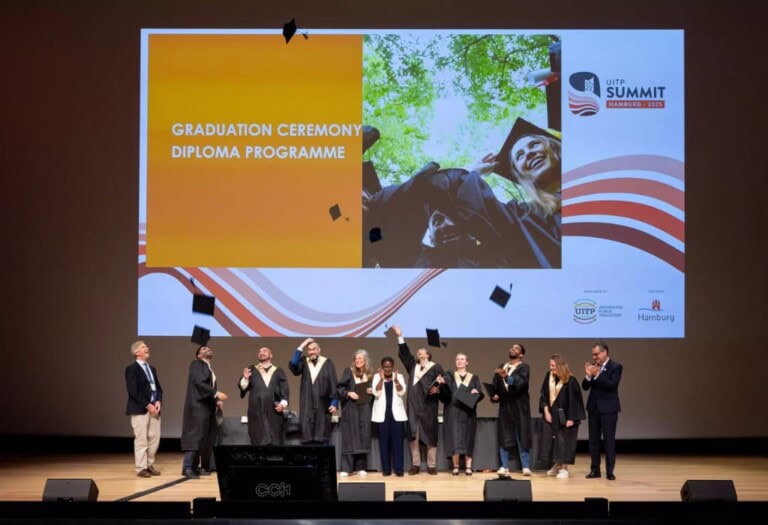
Certificate Ceremony
End of Day 2
17:30–17:30
More details will be confirmed
End of Visit
16:30–17:00
End of Diploma Programme
17:00–17:00
A Top Level Methodology
Expert trainers with extensive global experience in public transport management and operations.
3 interactive classroom modules integrating theory and practice.
Dynamic workshops conducted in small groups, focusing on practical case studies.
8 e-learning sessions facilitated through the UITP Academy Learning Management System, MyAcademy.
Urban Mobility Lab: Collaborative group project on public transport and sustainable urban mobility, applying learnings to real-world case studies.
UITP Training Programs and all related processes are certified for ISO 21001: 2018 – the standard for Educational organisations – Management systems for educational organisations.
E-Learning Sessions to Complement Your Knowledge
Eight e-learning sessions are integrated into the course via our Learning Management System (LMS), complementing each module with pre-reading materials and Knowledge Papers.
These sessions enhance knowledge acquisition and strengthen the connection between participants and UITP throughout the programme.
Each e-learning session employs a self-learning approach, featuring interactive quizzes and questions.
Topics covered in the e-learning sessions may include:
Indispensability of Public Transport
Public Transport and the city
Public Transport Regulation and Organisation
Funding and Financing
Public Transport Modes: Focus on Bus
Public Transport Modes: Focus on Rail
Safety and Security in Public Transport
Urban Mobility Lab
The Urban Mobility Lab offers a unique opportunity to explore the critical transportation challenges and opportunities through a fictional city case study.
Spanning various stages throughout the course, participants will:
Conduct a comprehensive analysis of current transport issues in the city.
Collaborate in small groups to develop a (mini) Urban Mobility Action Plan.
Strategize the implementation process and design a service contract.
This exercise prompts participants to contemplate various transportation policy approaches, determine optimal stakeholder involvement, outline actionable initiatives, and forecast outcomes and feasibility.
The Urban Mobility Lab will tackle key transport challenges via a fictional city case study.
Throughout the course, participants will:
Analyse current urban mobility issues of a city
Work in teams on a mini Action Plan
Plan implementation and draft a service contract
Trainers
Xavier ARRUFAT
Co-founder & CEO at AWAAIT Artificial Intelligence | UITP AI Working Group Chair | UITP IT&T Committee Vice-Chair
Spain
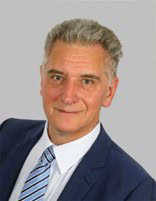
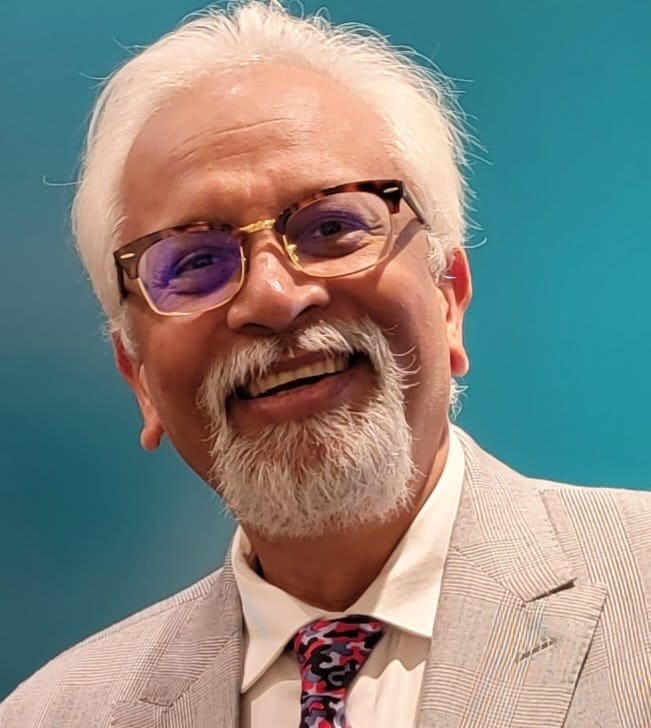
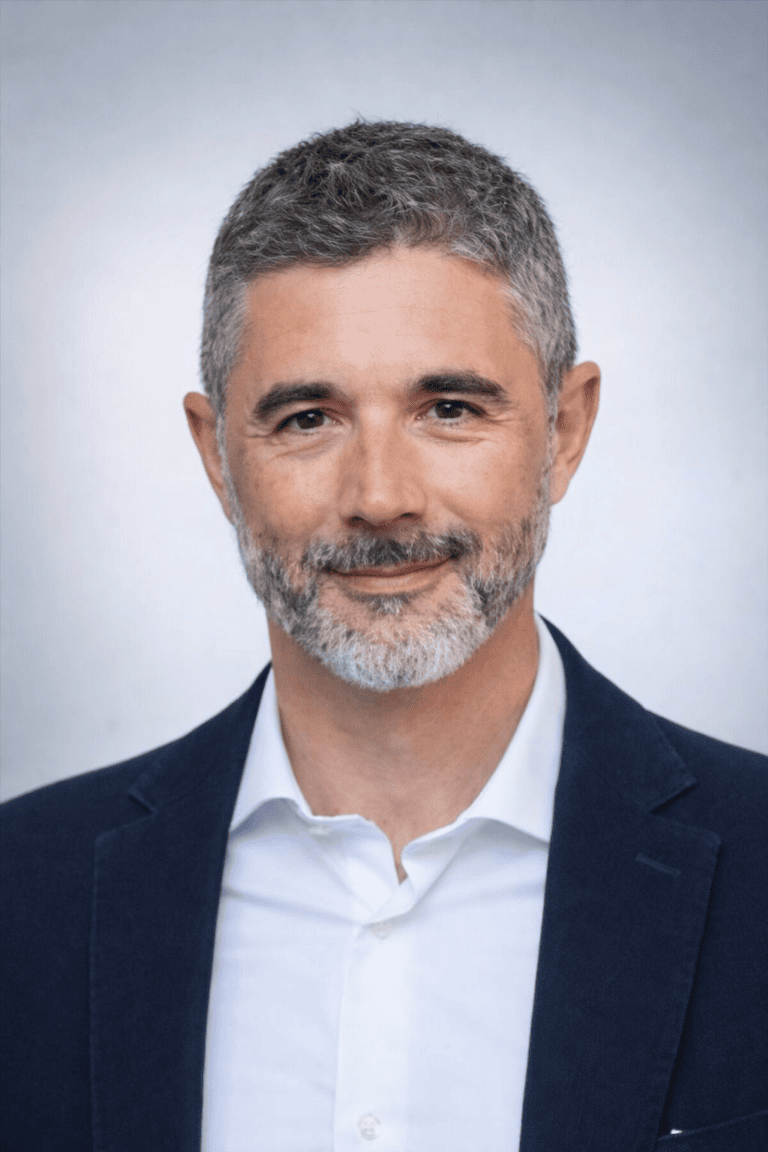
Mr Xavier Arrufat is CEO of Awaait Artificial Intelligence, S.L., an AI company based in Barcelona, and President of its US subsidiary, Awaait Inc. Originally trained as a civil engineer, he spent 12 years at GE Plastics and GE Healthcare, rising to EMEA Service Logistics Manager, before pivoting into artificial intelligence in 2012. His first AI project — a fare-evasion detection system for FGC in Barcelona — became the founding product of AWAAIT, which he co-founded in 2014. Beyond FGC, AWAAIT’s systems have been tested and deployed with multiple transit agencies across the USA, EU, and Middle East. Mr Xavier represents the AI Working Group of UITP.
Guido BRUGGEMAN
Bus Network Design Specialist, The Netherlands/Sri Lanka
Guido Bruggeman is an urban transport expert with 40 years of experience. After he graduated in 1975 as a transport engineer at the Breda University of Applied Sciences in the Netherlands, he started his career at the Municipal Transport Company in Amsterdam.
In 2000, he joined the European Bank of Reconstruction and Development (EBRD) in London as an Urban Transport Specialist and was involved in many transport projects in Eastern Europe and the former Soviet Union. Since 2007 he is acting as an independent consultant and advising international clients on the planning, organization, regulation and operation of urban transport. Among others, Guido acts as project advisor for the World Bank and Asian Development Bank. He is also a Lead Trainer at the UITP Academy. As an international expert he has worked in over 30 countries worldwide.
Gonzalo FERNÁNDEZ
Infrastructure Director
EMT Madrid
Spain
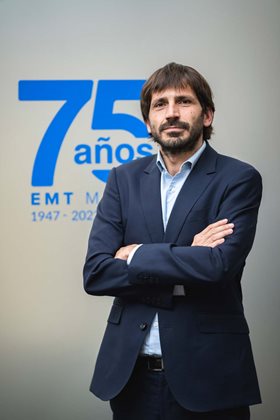
Gonzalo FERNÁNDEZ Infrastructure Director PhD. MSc. Civil Engineer. He is an expert in sustainability project management and low carbon technologies. He has collaborated in several international congresses and conferences, national and international R&D projects, has published in different scientific and technical journals and is part of different scientific committees related with sustainable infrastructures and urban planning. He is vicechair of the Sustainable Development Committee and currently leading the UITP working group on Renewable energy and energy transition in public transport. He is currently the Infrastructure’s Director of EMT Madrid
Dr Feyzullah GÜNDOĞDU
Senior Advisor Academy, Head of Eurasia
UITP
Belgium
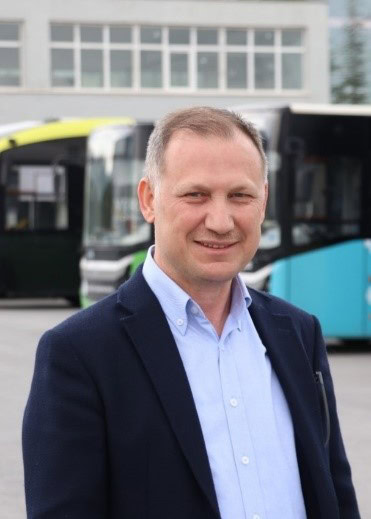
He is a public transport professional with over 25 years of experience in different phases, fields, and modes.
Currently, working for uitp as senior advisor to academy and head of Eurasia, responsible for peer review and assessment services as well as content management for training programs.
He completed the Ph.D. program in Business Administrations, with a thesis “Effects of Formalization of Informal Transport System on Stakeholder Satisfaction”.
He started his public transport journey in METRO ISTANBUL in 1999 and worked for six years in different positions such as signaling engineer, maintenance planning, software development engineer, risk management, etc.
He was head engineer for Kayseri rail system construction project in which later became managing director of the operator company, Kayseri Transportation. Under his management the company took over the operation of bus system including rural transport, bike sharing system, electronic fare collection, city car parking system, fiber communication backbone of the city, R&D center that developed smart traffic management and enforcement systems. Under his mandate, with his innovative approach the company received several national and international awards.
During his public transportation carrier, he worked in different fields and took different management roles like fixed installation (communication, power, track, signaling, overhead catenary) manager, RAMS&EMC manager, R&D manager, corporate development manager, construction manager, vehicles, and maintenance manager.
He was a member of the policy and executive board, and chairman of light rail division of UITP between 2015-2019. He was chairman of UITP informal Transport working group and member of presidential committee between 2019-2021. He was the president of Rail System Operators Association TÜRSİD, in Turkey. Vice president of Anatolian Rail Transportation Systems Cluster, ARUS. He was the Member of higher advisory board of Kayseri Industrial Chamber, Vice president board of Turkish quality association of Kayseri, and Member of the Advisory Board of İstanbul Technical University, Railway Safety and Security Application & Research Center.
Rachel HUGHES
Director
Surbon Consulting, UK and UAE
United Kingdom
Rachel has a BA (Hons) in Geography from University of Oxford and holds the inaugural Masters in Carbon Management from University of Edinburgh Business School. She is a Fellow of the Chartered Institute of Logistics and Transport.
Since graduating from Oxford, Rachel worked as a consultant beginning her career as a transport planner with WSP then worked for a start-up advising companies in the transport sector on how to reduce their carbon emissions. She then set up her own firm (Surbon Consulting) in the UK supporting transport operators such as Keolis, Go-Ahead, Serco and MTR on business development and contract mobilisation covering contract management, sustainability and customer experience. She has worked across all modes of transport: rail, metro, bus, ferry and cycle hire and more recently electric scooters. She set up a UAE branch of Surbon Consulting in 2017 and has delivered work in UAE, Qatar and Saudi.
She has been a member of UITP since 2015 and has found the conferencing and training courses offered by UITP extremely valuable. She has been an UITP trainer delivering training to TGA (Saudi), RTA (Dubai) and LTA (Singapore).
Alok JAIN
CEO & Managing Director
Trans-Consult Ltd.
Hong Kong SAR, China
Alok is the CEO & Managing Director of Trans-consult. He is an international expert in public transport operations and management, with specialisation in new technology, artificial intelligence, data analytics, and clean fuel technologies. With 30 years of experience in the industry, Alok has worked with an array of international consultants and leading transport operators such as MTR Corporation Hong Kong and Kowloon Motor Bus Hong Kong.
He is an international expert trainer and a Fellow of Civic Exchange, a Hong Kong-based non-profit independent think tank. He regularly teaches at the University of Hong Kong and serves as a Member of the Transport Policy Committee of the Chartered Institute of Logistics and Transport in Hong Kong. He has several publications to his credit, including contribution to a book on best practice in railways operations and management.
Alok is a civil engineer and holds post-graduate degrees in transportation engineering and management.
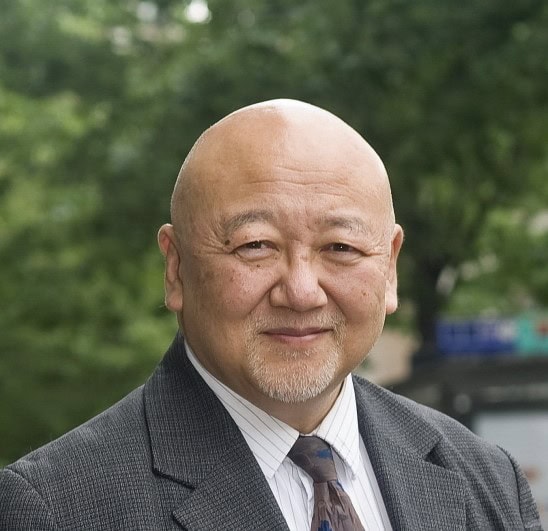
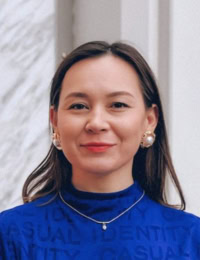
Graduating university as a civil engineer, Yo joined RATP in 1980. He began in the marketing team and was duly put in charge of Passenger Information. Over the ensuing years, Yo worked to build up RATP’s Design Management function – progressively integrating all the creative disciplines related to transport environment design – product design, information design, architecture, arts and culture management – becoming Head of Design Projects Management in 2011. Yo retired from RATP in December 2023 after 35 years with the company.
Yo’s department steered many of RATP’s infrastructure investment projects, coordinates policies and ensures the inclusion of Design Quality in RATP Group’s corporate strategy.
He serves on the boards of several organizations focussed on design promotion and design education in France and is a former Chair of the UITP Design & Culture Committee.
Christiane JUST
Founder and President
Contexture
France
Christiane is passionate about creating organizational performance by using lean management and coaching tools. Born in Germany, she started her international career at the UITP in Brussels. Since then she has worked and lived in the US, UK, Germany and is today based in Paris, France. She fluently speaks German, French and English.
She is a senior leader with an over 20 year career in the mobility sector, she has worked as general manager as well as in corporate leadership functions for a private mobility operator. Notably she was in charge of the lean transformation of the group Transdev achieving notable performance improvements.
As companies are facing multiple and more complex challenges today, they are forced to transform and change in order to respond to those challenges. Although AI and automation/ digitalization are important aspects of companies today, people are the driving forces and therefore her center of attention. She finds ways to accompany people to align processes, strategies and their leadership whilst companies use new opportunities and adjust.
Aside from her expertise in Lean management, she is a certified executive and team coach using a systemic approach. Her company Contexture offers coaching, consulting and training services for clients in Europe and the world.
Lilli MATSON
Chief Safety, Health and Environment Officer
Transport for London
United Kingdom
Lilli is leading our work to make the capital safe and attractive for all journeys, and to achieve our goal of Vision Zero, where no one is injured or killed on the transport network.
Lilli joined TfL in 2006 and has been Chief Safety, Health and Environment Officer since September 2019. One of her many passions and responsibilities is working to address the climate crisis and to achieve a net zero carbon railway by 2030 and to ensure TfL’s environmental performance is exemplary.
Her career has included being a member of the UK Government’s Commission for Integrated Transport and running her own transport consultancy where she led major projects on sustainable transport for a range of clients.
She is an alumnus of Imperial College, having gained her MSc in Environmental Technology at its Centre for Environmental Technology.
Lilli was appointed to the Board of the Environment Agency in 2021.
Stefano Manelli
Director
Citec Torino
Italy
Graduated from the Institute of Technology of Turin and Lausanne (EPFL), Stefano developed mobility studies for prof. Bovy for the Olympics in Sydney 2000, Athens 2004 and Turin 2006
In 2003 he joined the Turin 2006 Winter Olympic and Paralympic Games Organizing Committee, as specialist on urban mobility, public transport, rail services between urban and mountain clusters, and venue transport operations.
In 2006 Stefano co-founded Citec Italia, the Italian branch of our Swiss based transport and mobility engineering firm where, almost 20 years later, he still serves as the Managing Partner, as well as member of the Board of Directors and Head of the Events Department.
During his career, he worked as consultant for Organizing Committees and Host Countries on numerous transport projects of the Winter and Summer Olympic Games Biddings such as Annecy 2018 and Istanbul 2020; he produced strategic mobility assessments for Sochi 2014, FIFA World Cup 2018, while he led the Transport teams of the Ryder Cup of Paris 2018 and Rome 2023.
Since 2007 Stefano has been working as mobility and transport advisor for UEFA contributing to the following projects: UEFA Euro 2008, 2012, 2016, 2020, as well as UCLF UEFA Champions League Final in Milan 2016, Kiev 2018, UELF Seville 2021 and UCELF Prague 2023. He also worked with FIFA, where he developed the Transport Bidding Requirements and the evaluation methodology to evaluate the candidatures and assign the FIFA World Cup 2026.
From 2012 to 2015 he worked as advisor to the IOC-International Olympic Committee as member of the Evaluation Committee working group for the 2020 and 2022 Olympic and Paralympic Games then assigned to Tokyo and Beijing respectfully. Stefano was also involved in the early transport planning phases of the Winter Olympic and Paralympic Games of Pyeongchang 2018.
In 2015 Stefano was appointed as Transport expert by the Bidding Committee for Paris 2024, to manage and develop the mobility concept, coordinating local public partners and authorities. Since 2018 he has been the director of the transport technical assistance mission of Citec to the Paris 2024 Olympic and Paralympic Games Organizing Committee.
During the last part of the bidding phase of Milano-Cortina to win the 2026 Olympic and Paralympic Winter Games, Stefano was the Bidding Committee Transport Expert. Since 2020, he has been the Head of Transport for Fondazione Milano Cortina 2026.
197 Blackfriars Road London SE1 8NJ United Kingdom
The training will take place at the Transport for London Headquarters, located just a short walk from Southwark Underground Station (Jubilee Line).
London Hotels
To enhance the learning and networking experience, we recommend that participants stay at the same hotel whenever possible. Staying together provides additional opportunities to connect with fellow participants outside the classroom, whether over breakfast, dinner or informal evening discussions throughout the programme.
Our preferred hotels for Diploma Programme participants:
Mercure London Bankside 4★
ibis London Blackfriars 3★
Other nearby hotels
If the recommended hotels are fully booked, you may also consider the following hotels located within walking distance or 1–2 Underground stops from the training venue:
Novotel London Bridge 4★
Novotel London Blackfriars 4★
H10 London Waterloo 4★
Park Plaza London Waterloo 4★
Lost Property St Paul’s London – Curio Collection by Hilton 4★