Get inspired by our trainers, understand the main aspects of bus planning and scheduling, and learn from successful best practice
Participate to interactive plenary sessions with introduction by course leaders, presentation by trainers and open discussion with participants
Challenge your practical knowledge on the effectiveness and quality of bus planning and scheduling
Address topics and issues from an international perspective, enriched by different cultural approaches and points of views
Participate in practical exercises ‚in the field’ allowing you to apply the principles and methods learnt during the training course
Benefit from a unique exchange of knowledge and experience between professionals
UITP Training Programmes and all related processes are certified for ISO29990:2010 – the standard for learning services for non-formal education and training.
Who is it for?
Staff from Bus transport operators or authorities responsible for the planning & scheduling.
Staff from the industry worldwide involved in the market uptake in this area: ITS companies, software developers and vehicles manufacture
Professionals from Bus planning operations, engineering, finance departments
Professionals interested in obtaining a wider and international perspective on this topic and eager to learn more from best practice worldwide.
Inspiring trainers
All UITP trainers are top level transport and mobility professionals with extensive experience in public transport and operations from different regions of the world. In addition, UITP invites guest speakers to illustrate specific solutions, practices and case studies.
Programme
Welcome, objective and introduction to the programme
09:00–09:30
Overview of the planning and scheduling process and the main parameters involved.
What objectives we want to achieve and what do we actually perceive as good planning?
Coffee break
10:30–11:00
Impact of the network design and route planning on the efficiency and flexibility of the planning of operations.
Network design may have also an impact on the time-table design when routes needs to be coordinated or synchronized.
Lunch
12:00–13:00
How to design a timetable,
Which parameters are leading, and which steps are involved in the design process?
How to make time-tables passenger-friendly.
Coffee Break
14:30–15:00
Short presentation of all the processes from timetable creation to crew rostering through vehicle shifts and driver shifts.
Overview of the parameters and potential costs within each process
Feedback about a project which dealt with production optimization – Stakes and Difficulties
Which parameters needs to be taken in account for the vehicle planning.
What will be the impact of maintenance and fleet availability?
Case Study – Optimization of School transport operations
09:00–10:00
Coffee Break
10:00–10:30
How to plan human resources and which parameters are involved in personnel planning.
How to optimize the personnel and resource planning?
What freedom and flexibility we will give to our drivers?
Shortages in bus driver availability
Role of part-time drivers in cost reductions and service stabilisation
Improving the gender participation
Driver safety in era of pandemics
Training the drivers as customer service champions
Drivers at the frontline of post-covid recovery
Lunch
12:30–13:30
Their presentation is based on the optimal planning from the available personnel and resources while increasing the motivation and satisfaction from their employees at the same time.
Coffee break
15:00–15:30
How do we minimize the difference between planning and actual operations?
Can we apply standard procedures for management of disruptions in daily operations?
Timetable and headway control through driver and dispatcher
Real-time passenger information and incident management
Optimisation through statistical data
What is a good bus network for the passengers
How can we gain passengers from the car to the public transport?
What is the different between network planning in cities and regional areas?
Addressing the changes in travel pattern or modal shifts
Influencing the city policies in favor of bus operation
Social distancing and impact on bus capacities
Frequency enhancement or reduction
Cost of operation and financial support
Hygiene, cleanliness and sterilization
Coffee break
11:00–11:30
Technologies reshaping the world which could be relevant to bus industry
Importance of efficiency and financial performance in the long-term sustainability
Fleet management, dispatching and real-time operational management
Using technology to bring agility in bus operation
Artificial Intelligence and machine learning use cases
Depot automation – use cases and opportunities
Automated disinfection and sterilization of buses for operation
Lunch
12:30–13:30
Technical visit – Operations Control Center + Electric bus induction charging infrastructure.
13:30–16:00
Trainers
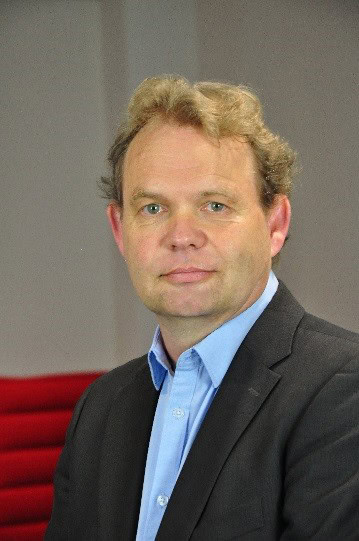
Guido BRUGGEMAN
Bus Network Design Specialist, The Netherlands/Sri Lanka
Guido Bruggeman is an urban transport expert with 40 years of experience. After he graduated in 1975 as a transport engineer at the Breda University of Applied Sciences in the Netherlands, he started his career at the Municipal Transport Company in Amsterdam.
In 2000, he joined the European Bank of Reconstruction and Development (EBRD) in London as an Urban Transport Specialist and was involved in many transport projects in Eastern Europe and the former Soviet Union. Since 2007 he is acting as an independent consultant and advising international clients on the planning, organization, regulation and operation of urban transport. Among others, Guido acts as project advisor for the World Bank and Asian Development Bank. He is also a Lead Trainer at the UITP Academy. As an international expert he has worked in over 30 countries worldwide.
Rimbert SCHURMANN
Project Manager
PTV Group
Germany
Rimbert Schümann has been employed at PTV AG since 2001. He is active in the field of public transport planning and consulting as project manager in which he accompanies and coordinates various projects. The range of his professional expertise ranges from creating public transportation master plans (e.g. the Bus Master Plan Dubai), optimising bus concepts up to creating concepts on local transport and tram networks. Here the main focus lies on the development of operational concepts, the investigation into demand changes and forecasts, economic viability analyses and evaluations.
He was able to build up and deepen his expertise in both of his earlier positions in renowned consulting companies (VCK Verkehrs-Consult Karlsruhe GmbH and TTK Transport Technologie – Consult Karlsruhe GmbH).
In 1992 Rimbert Schürmann gained his Master’s Degree in Civil Engineering at the University of Dortmund, Germany, in the field of urban and regional planning.
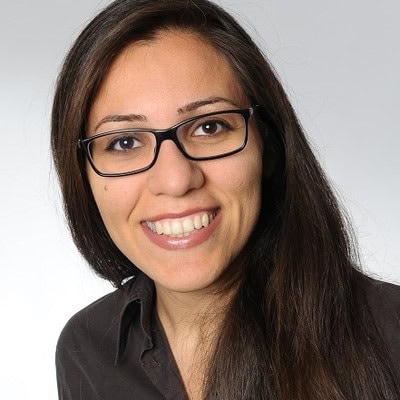
Farnaz TEPPER
Principal Product Manager
PTV Group
Germany
Farnaz Tepper got her Bsc. in Geodesy and land surveying in Tehran at KNT university in 2004 and later in 2006 she got a Msc. in Geomatics at Hochschule Karlsruhe. She is working since 2007 in PTV group. Till 2018 she was working as a GIS data engineer and a data manager and since 2018 as a product manager in the mobility product management team.
She has a deep knowledge of GIS and data modelling which is of one the key issues in the public transport planning field. She is a product manager of PTV Lines, which was launched in April, a web-based cloud software, for public transport service planning use case (https://blog.ptvgroup.com/en/city-and-mobility/public-transport-planning-ptv-lines/).
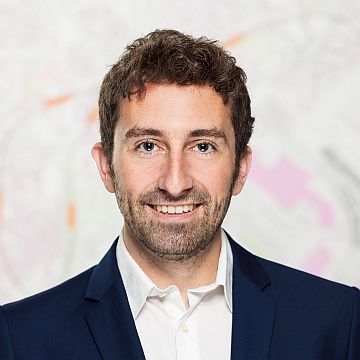
Maxime FISCHER
Transport & Mobility Consultant
Transporttechnologie-Consult Karlsruhe Gmbh
Germany
Maxime Fischer is a graduate of Engineering from École Centrale de Lyon, France, and from ICAI & ICADE Business School, Spain. He has been working as a Consultant, primarily involved in upstream studies for transport planning and operation.
Since 2020, he has been employed at TTK, where he took part in numerous projects related to public transport systems such as buses, BRT, tramways, railways, as well as the deployment strategy for electric and green vehicles in public transport. His work also includes infrastructure planning, traffic and parking studies, both in rural and metropolitan areas.
Among other tasks, he has specialized in transport planning and scheduling, allowing him to conduct optimization and performance audits for operators.
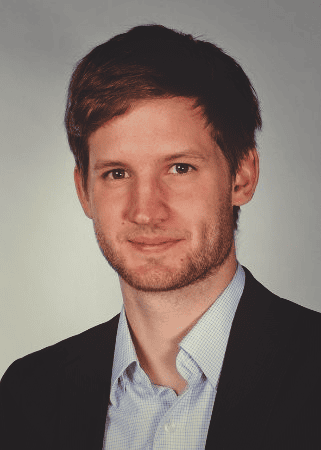
Georg-Maximilian MICHALSKI
Account Manager
Init GmbH
Germany
Max has degrees in Engineering from University of the West of England, Project Engineering from Baden-Württemberg Cooperative State University and a Masters in Transportation Systems from Technical University Munich.
He has worked for the commuter railway branch division of Deutsche Bahn AG, where he was involved in various operational projects including maintenance planning, disposition as well as overall production planning. Later Max joined Mitsui Rail Capital Europe to set up a material requirement planning for their locomotive fleet.
Thereafter Max worked for the Singapore based research institute TUM CREATE to develop a Singapore public transport model using the automated fare collection smart card data provided by the Land Transport Authority. On this basis, he did various analysis of the public transport in Singapore.
In 2016 Max joined INIT, Karlsruhe-based leading supplier of integrated telematics and ticketing solutions for public transport. He worked in different roles in sales, training and consulting and assisted multiple customers internationally. Currently he is working as a Key Account Manager. There he is assisting customers in Norway, Sweden, Finland, Denmark, Luxembourg and Germany with INIT’s solutions.
Mary JOYCE
Personnel & Resource Planning from the perspective of the Karlsruhe transport association
Verkehrsbetriebe Karlsruhe GmbH
Germany
Mary Joyce has been working for the Verkehrsbetriebe Karlsruhe GmbH in Germany for the past 19 years. She comes originally from Ireland and found her way to Germany through her Hotel Management Training.
She is also a CCI Bachelor Professional of Business and she will be finishing her studies as a CCI Professional in Business Management this year.
Mary Joyce has worked in numerous departments within the public transport system. She has learned how to drive the trams and buses in Karlsruhe and went on to work in the Control Center. She also worked in the service office where she assigned duties to the Tram and Bus drivers. At the moment she is responsible for the Ticket-inspection and Security section.
She is looking forward to presenting the topic “Personnel & resource planning from the perspective of the Karlsruhe transport Association” with her Co-host Dr Philipp Heise.
Their presentation is based on the optimal planning from the available personnel and resources while increasing the motivation and satisfaction from their employees at the same time.