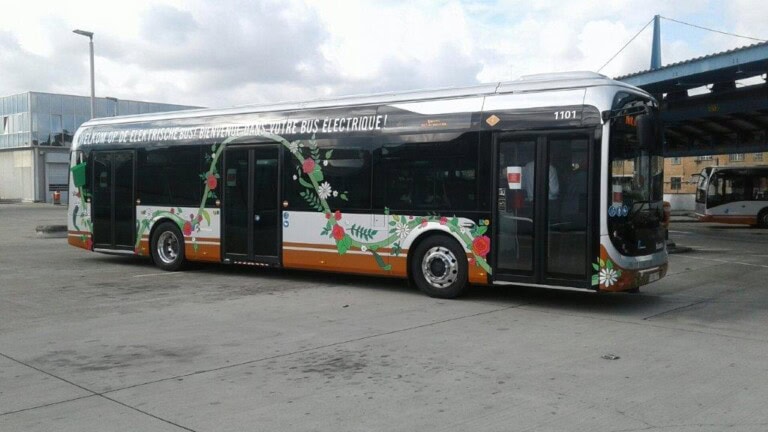
With more and more metropolitan areas targeting zero-emission environments, an increasing number of cities, transport authorities and operators are considering a fully-electric solution for their urban bus network.
In this context, the UITP Academy designed this online training programme on Electric Buses offering a comprehensive overview of the electric solution for urban bus networks: from the setting of a long term city strategy in terms of energy transition to the definition of a charging strategy and the choice of technology and all the way to the procurement and the implementation and operation of the system.
Introduce the electric solution, the different types of technologies and compare their benefits and drawbacks
Understand the products on offer and the mainstream technology options available, competition and maturity level of the suppliers
Understand how to develop an operational and charging strategy
Learn from experience on how to plan, implement and run electric bus lines successfully
Understand the implications for operations and infrastructure
Learn from successful major electric bus project implementations including electric bus system procurement
Understand how technology and data management can help optimising your operations and charging
A top level methodology
Get inspired by our trainers, understand the main aspects of electric buses and learn from successful international best practice
Participate in interactive plenary sessions which includes an introduction and presentation from the course leaders and the trainer, followed by an open discussion with participants
Challenge your practical knowledge on the technology, the implementation and the running of electric buses
Address the topic from an international perspective, enriched by different cultural approaches and points of views
UITP Training Programmes and all related processes are certified for ISO29990:2010 – the standard for learning services for non-formal education and training.
Who is it for?
Project managers, engineers and other professionals eager to learn more about the technology, the implementation and the running of electric buses
Staff from public transport operators or authorities planning to extend a fully-electric solution to the core part of the urban bus network
Staff from the bus industry worldwide involved in the market uptake of electric buses
Professionals interested in obtaining a wider and international perspective on electric buses and eager to learn more from international best practice
Having a good level of English is a compulsory requirement to attend the course.
Inspiring trainers
All UITP trainers are top level transport and mobility professionals with extensive experience in public transport and operations from different regions of the world. In addition, UITP invites guest speakers to illustrate specific solutions, practices and case studies.
Programme
Welcome and introduction to the course
09:00–09:30
What is an electric bus and how can electric buses contribute to making public transport network competitive and our cities sustainable? What are the drivers and barriers when it comes to the choice of technology? How can it affect the institutional organisation and governance in a city?
Coffee break
10:30–11:00
This session will look into infrastructure and technologies used to run electric busses, whether it be the installation and running of charging infrastructure, the impact on information technology systems, driver assistance and standardisation of the connection.
Lunch
12:30–13:30
From line management and maintenance to training of personnel, driving and safety, the operations of a fully electric bus line differs substantially from that of a traditional bus line. The importance of studying the initial operational needs are key to successfully introducing electric buses, as much as the design and dimensioning of the line according to the energy supply and usage.
Coffee break
15:00–15:30
To successfully implement and run fully electric line, it is essential to make the tendering process evolve from a simple vehicle purchase to the tendering of a comprehensive electric system, taking into account life cycle costs, charging infrastructure, batteries, economic models, leasing and renting, etc.
Case Study – Developing an electric bus operation and procuring electric buses: The Case of Transdev (part II – on procurement)
09:00–10:00
Coffee break
10:00–10:15
Session 4- Batteries for Electric buses
10:15–11:30
Coffee break
11:30–11:45
Session 5 – The power of data in electric bus operations
11:45–12:45
Lunch
12:45–13:45
Case Study
13:45–14:30
Coffee break
14:30–15:00
Workshop & discussions on the lessons learnt from electric bus deployment and operations
15:00–17:30
Please be on time so that we can start at 8 am sharp!Luggage: We highly recommend leaving them at the hotel or at UITP offices.
Metro tickets will be provided by UITP
Train tickets will be provided by UITP
Transfer to the offices of De Lijn
Flemish public transport company De Lijn has a fleet of 324 e-hybrids. They are converted soft hybrid EUR6 diesels that have been fitted with additional battery capacity so that they have an electric range of 15 to 100 km (depending on type) on a single depot charge. In addition, they can also charge during service when driving on the low-emission diesel engine. In addition, all e-hybrids are fitted with geofencing software. This means that they can be programmed to drive ZE in defined zones, densely populated areas by preference. As they can also be charged while driving, they are ideal for operators who face difficulty in having their depots electrified but would like to improve air quality in densely populated areas, such as cities.
Light Lunch
13:00–13:30
Study visit – Transfer by e-Bus / hybrid electric bus to charging area and back to train station
13:30–15:30
Train departs from Leuven to Brussels (depending on train schedule)
15:30–16:30
Train arrives in Brussels (10min metro to UITP offices if you have left your luggage there)
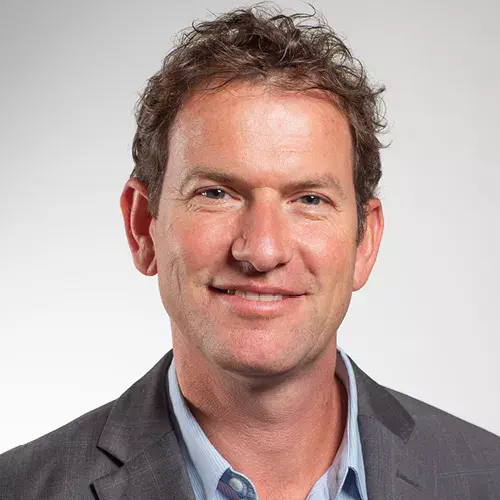
Arno Kerkhof was born in 1972 in The Netherlands. In 1996, he graduated as a Civil Engineer at the Engineering University of Delft after having obtained in 1995 a Certificate in Transport and Planning at the French Ecole Nationale des Ponts and Chaussées in Paris (ENPC). Arno joined UITP in 2003 where he carried out the Bus of the Future project.
He is currently Global Head of Bus Division and is directly in charge of all content and knowledge-related bus activities within the Association, coordinating members’ work on the Bus Committee, the Trolleybus Committee, its four Technical and Operational Working Groups and the UITP Industry Committee and acts as senior trainer on a worldwide basis in the development of the UITP training services.
Arno develops cross sectoral activities (Tender Structure platform, SORT fuel consumption referential, Standard Bus Activity Model) and is doing research on Bus Systems.
Arno Kerkhof is a confirmed public transport professional with a long practical and field experience in the services as described above.
Stefan WIDLUND
City Mobility Director
Volvo Bus Corporation
Sweden
Based at Volvo Buses‘ Headquarters in Gothenburg, Sweden. Since 2017 Stefan is supporting regions and cities to transform to electric bus traffic. This includes route analysis, charging strategy, stakeholder engagement, project planning, zone management and all aspects from an operator’s perspective in the transition to electric bus traffic including sustainability.
Prior to joining Volvo Buses, Stefan spent 23 years working at Ericsson, whereof 6 years based in Asia. Stefan has a Master of Science – Industrial Engineering from Chalmers University of Technology in Sweden.
Sanne VAN BREUKELEN
Senior Project manager at Cenex Nederland
Netherlands
Where chaos still prevails, the final objective is unknown and where people do not yet know each other. That is where I prefer to work. As an interpreter/translator, as a connector, as a quartermaster.
And let the energy transition be just that 🙂 And also the most crucial issue of our time. So I can make a difference!
Kurt GYSELINCK
Programme Manager
De Lijn
Belgium
Kurt Gyselinck joined De Lijn in 1999 as an operations expert in the West Flanders province and has stayed with the Flemish public transporter, with the exception of a 5 years spell as adviser on public tramnsport to the Flemish Mobility and Public Works minister (2009-2014). When he rejoined, Kurt became Head of Operations in West Flanders. From 2019 on, he manages the Electric Bus Systems program at De Lijn. This program coordinates the electrification of the entire fleet (2100 buses), all the 51 depots and associated charging and IT infrastructure.
Dirk BUSSCHAERT
General Manager
De Lijn Oost-Vlaanderen
Belgium
Dirk Busschaert started his career as an R&D engineer with Philips in Roeselare. Subsequently, his career took a more commercial turn when he became product manager for Europe, then Asia. When his Philips division was taken over by Vishay in 2003, he became the new division’s Senior Director Marketing with several factories around the world.
In 2007, Dirk joined the Flemish public transport company De Lijn in the East Flanders province as its General Manager. With De Lijn’s 2018 transformation, he becomes Director of Operations or COO. His responsibility now extends across the whole of the Flemish Region, with 6500 employees.
Claudius JEHLE
CEO / Managing Director
volytica diagnostics GmbH
Germany
Claudius Jehle is founder and CEO of volytica diagnostics GmbH, a company focusing on easy, safe and independent battery quality and health assessment. Claudius studied Mechanical Engineering and System Identification in TU Munich and TU Delft until 2012, and was then leading the research group Energy Storage Diagnostics and Telematics at the Fraunhofer Institute for Transportation and Infrastructure Systems IVI, Dresden, from 2013 until 2019.
Besides his role as CEO, Claudius is giving lectures on Battery Basics and Battery Degradation, writing knowledge base articles and is giving speeches and presentation on the global topic of batteries, the involved value chains and the potentials around independent battery diagnostics.
Tanguy BOUTON
Mobility and Energy Transition Expert
France
Tanguy Bouton has over 15 years of experience in Public Transport and Decarbonation. He started his journey in 2010 at PVI working on a 12m electric bus prototype.
He then worked at RATP Dev as scheduler and network designer to build the Riyad Bus network.
In 2016 he started working for Transdev France as Bus & Coach Energy Transition Manager to later work for Transdev Group as Energy Transformation Energy Manager and finally Group Fleet Director to create the Zero Emission Team, including R&D, training, bidding and supporting operations for 13 countries.
As of 2023 Tanguy moved to South of France as fleet and maintenance manager and finally came back to the industry world, working with REV Bus&Truck to speed up energy transition through retrofitting current thermal Busses and Coaches in Electric vehicles in France and Europe.