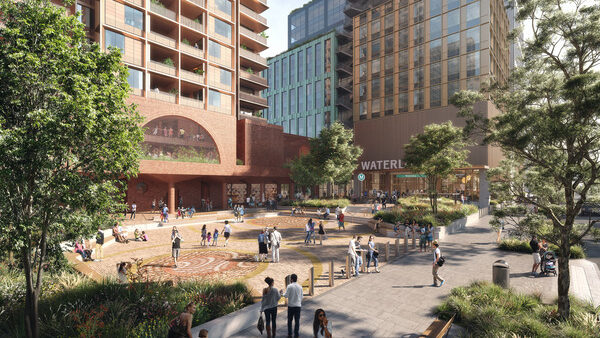
UITP Academy, is launching the first onsite course in 2025 on Transit-Oriented Development: Planning for Smart and Sustainable Mobility, between 24-26 March in Sydney, Australia. The course will be 3 days including classroom sessions, international case studies and technical visits.
Reach your objectives
Urban mobility planning and impact on cities
Correlation between urban development plan and transport planning
Transit Oriented Development and impact of land use on public transport use and operations
Examples of integrating urban and transport planning
Design of transport (road) infrastructure in favour of public transport
Monocentric and polycentric development and effect on transportation
Sustainable Urban Mobility Plans (SUMP) and difference with conventional transport planning
Change in mindset to create liveable and accessible cities
Supporting public transport use through improved pedestrian and cycling facilities
Mobility and demand management
Zoning for accessibility
Ways to finance TOD projects
Who is it for?
Professionals from city planning, transport planning departments of authorities or institutions
Staff from bus transport operators or authorities responsible for the operation, planning & finance departments
Staff from industry worldwide involved in the market uptake in this area: ITS companies such as electronic payment
Professionals interested in obtaining a wider and international perspective on this topic and eager to learn more from best practice worldwide.
A good level of English is a compulsory requirement to attend the training.
A top level methodology
Get inspired by our trainers, understand the main concepts and learn from successful best practice
Participate in interactive plenary sessions with introductions by course leaders, presentations by trainers and open discussions with participants
Challenge your practical knowledge on TOD
Address the topic from an international perspective, enriched by different cultural approaches and points of views
Participate to practical local and international case studies
Benefit from a unique exchange of knowledge and experience between professionals.
UITP Training Programmes and all related processes are certified for ISO29990:2010 – the standard for learning services for non-formal education and training.
Inspiring trainers
All UITP trainers are top level transport and mobility professionals with extensive experience in public transport and operations from different regions of the world. In addition, UITP invites guest speakers to illustrate specific solutions, practices and case studies.
Programme
Welcome & Introduction
09:00–09:50
Session 1a
The relation between Urban Planning and Transport
Urban Sprawl versus Compact Cities
Impact of Land Use Planning on public transport
Tea break
10:30–11:00
Session 1b
Principles of TOD
Towards a TOD mindset
Session 2
Integrated land transport systems and transport planning in Sydney/NSW/Australia
Session 3
TOD in the context of Vancouver, British Columbia, through over two decades of rapid transit development
How has the design and delivery of both transit infrastructure and development re-shaped communities?
What can progressive and more integrated models of design and delivery offer future projects in the region?
Lunch break
13:05–14:05
Session 4
The role of sound urban planning
Successful examples of TOD
The role of government, transport operators and project developers
Cooperation between stakeholders involved
Where is the funding and financing come from?
Tea break
15:20–15:50
Session 5
Role of railway stations in urban planning in Japan
Business structure of private railways in Japan for TOD development
Regulatory and financial mechanisms supporting TOD
Five key elements for successful station integrated urban design
Case studies- TOD station integrated projects around Japan
Wrap up of Day 1
16:35–16:50
Session 6
Background on the MTR Rail + Property business model
Early TOD Developments:
Telford Gardens
Hong Kong & Kowloon Stations
LOHAS PARK
Becoming a Purpose Driven Business
Oyster Bay New Town Case Study
Session 7
What is mobility and demand management?
Why integrated mobility management is needed nowadays?
How public transport can benefit from mobility management?
Promoting sustainable transport through management
A shift in approach and attitude towards traffic and transport planning
Push and pull measures: basic principles of mobility management
Role and charisteristics of Urban Mobility Plans
How to design a Mobility Plan?
Best practice examples and results
Tea break
10:45–11:15
Session 8
West Kowloon District and Urban Planning Goals
Kowloon Station Airport Express and Tung Chung Line
Planning and Development of the TOD
West Kowloon High Speed Rail Station
Development and Integration with West Kowloon Cultural District
Session 9
MTA’s TOD programme on improving accessibility with adjoining buildings to reduce street congestion
Case studies on TOD for rural areas
Lunch break
13:00–14:00
Session 10
As cities become more complex and metro systems expand to meet ever increasing demand, how do we keep the experience of using large, complicated spaces legible? In this session, Andrew Mead will discuss the power of art to humanize complex spaces and aid wayfinding
Sheppard Subway Toronto
Art in Transit, Singapore
Dubai Metro
Art in MTR, Hong Kong
Session 11
The FILI project, promoted by FNM, is a regional scale urban regeneration project built
along the Milano Downtown – Malpensa airport railway line (50km). It includes 4 major redevelopment areas on 4 stations as well as a long distance fully segregated bike
lane and reforestation. The case study will cover:
• Strategic view
• Description of the project(s)
• Impact on mobility
• Impact on regional development
• Role of different players
• Financing model
Tea break
15:30–16:00
Panel discussion: Leveraging International Case Studies for TOD Success: Insights for Land Use, Transport Integration, Station Design, and Policy in Australia & New Zealand
16:00–16:50
Wrap up of Day 2
16:50–17:00
Session 13
What if public transport is forgotten in road infrastructure design
Planning for public transport at an early stage of road design
Connection public transport to the environment (accessibility and safety)
Best practice examples of dedicated bus infrastructure
What can we do better in order to avoid sub-optimal solutions for public transport?
Group Workshop
09:45–10:30
Tea break
10:30–11:00
Session 15
Increasing the quality and quantity of public transport for sustainable mobility
Developing superblocks
Improving infrastructure for sustainable mobility
Implementing restrictive parking policies for private vehicles
Exploring the history, evolution, and recent implementation of Superblocks in Barcelona
Focus of Discussion:
Exploring the history, evolution, and recent implementation of Superblocks in Barcelona
Session 16
How can we develop guidelines that align with urban growth while ensuring accessibility, inclusivity, sustainability, and attractiveness for all? With the Brussels example, we will see how to combine technical, functional, and operational constraints with user experience to seamlessly integrate stations into their surroundings and support local development.
Key Content Areas:
Alignment with urban development strategies
Ensure universal and inclusive accessibility
Strengthens safety and attractiveness of mobility spaces
Enhance user and local stakeholder satisfaction
Facilitates flow management
Facilitates maintain
A well-designed station is more than a mobility hub – it drives economic and social vitality, strengthens the transport network, and enhances the identity and livability of its neighborhood.
Group Discussion and Sharing, training certificate presentation
12:00–12:45
Lunch break
12:45–13:30
Key themes: urban design and uplift, multi modal transport, landscape and urban integration, ongoing work including planting trails
Hosts: Ross de la Motte & Jon Hazelwood from Hassell Studio
Visit Showground Station (part of the Metro North West line)
Showcase presentation on Sydney Metro NorthwestLine – to be presented on site – outdoors Amphitheatre space at Showground station
Trainers
Andrew MEAD
Architect, Transit Design, former Head of Architecture of MTR Corporation
Meada Design
Hong Kong
Andrew Mead is an Architect specializing in Transit Design. He has 30 years of experience in North America, Europe and Asia and has worked as the Chief Architect for the Singapore, Dubai and Hong Kong Metros. He has been the client for multiple award-winning designs, including World Architecture Festival Transportation Building of the Year 2009 for Brash Basah Station. Responsible for the design management of over 100 stations in Singapore from 1996 to 2013, Andrew has been the most influential transit architect in the nation. He is also the creator of the ‚Art in Transit‘ programme that is now Singapore’s largest public art programme.
In 2013, Andrew moved to Hong Kong to lead MTR’s multi-disciplinary design team working across a range of scales and contexts, from master planning of new stations and precincts, integration of stations with TOD developments, to detailed design of new rolling stock, ticketing facilities, and even uniform design. Andrew understands the essence of place making and the qualities that are needed to create some of the world’s finest Transit Orientated Developments. Combined with his technical and people management skills, he has a proven track record of delivering projects of the highest quality.
Andrew is a graduate of the University of Sheffield and began working in transit design in 1985 with the legendary Design Research Unit (the original architects of the Hong Kong metro). West India Quay on the Docklands Light Railway was the first station designed by Andrew in the U.K. In 1992 Andrew moved to Toronto, Canada where he worked on the design of 5 stations on the Sheppard Subway and managed the public art programme, commissioning artists to create site specific artworks at each station.
From 2006-2008 Andrew was the Chief Architect of the Dubai Metro Red & Green Lines. Andrew’s design leadership transformed the look of the stations into the required ‚Dubai Class‘ standard and he was instrumental in improving the metro stations integration with the surrounding urban environments.
He has collaborated with professional organizations globally such as AIA, RIBA and the UITP where he chaired the Design & Culture Committee for four years and now sits as Honorary Chair. Andrew has lectured widely on both architecture and art at international conferences and universities. The artworks he has commissioned have been published in four books with a fifth currently in production.
Guido BRUGGEMAN
Bus Network Design Specialist, The Netherlands/Sri Lanka
Guido Bruggeman is an urban transport expert with 40 years of experience. After he graduated in 1975 as a transport engineer at the Breda University of Applied Sciences in the Netherlands, he started his career at the Municipal Transport Company in Amsterdam.
In 2000, he joined the European Bank of Reconstruction and Development (EBRD) in London as an Urban Transport Specialist and was involved in many transport projects in Eastern Europe and the former Soviet Union. Since 2007 he is acting as an independent consultant and advising international clients on the planning, organization, regulation and operation of urban transport. Among others, Guido acts as project advisor for the World Bank and Asian Development Bank. He is also a Lead Trainer at the UITP Academy. As an international expert he has worked in over 30 countries worldwide.
Dr. Gordana MICIC
Head of Art & Architecture Office, Special Studies Department, General Management
STIB-MIVB, Brussels
Belgium
Stefano ERBA
Chief Strategy Officer
FNM S.p.A.
Italy
Michael PELLOT
Director of International Affairs
Transports Metropolitans de Barcelona (TMB)
Spain
Michael started his professional activity as Engineer in Caracas, Vienna & Barcelona.
He is involved with Public Transports since 1992 when he started at Transports Metropolitans de Barcelona (TMB), Barcelona. In this company he played different roles. In 2017 he assumes the International affairs management of TMB.
He is member of the International Public Transport Association (UITP), chairman of the Transport & Urban Life Committee at UITP, member of the European Railway Research Advisory Council (ERRAC) and member of Railgrup, the Catalan railways cluster.
Michael Pellot, Head of International Affairs at TMB, Barcelona
Jeff DOBLE
Principal
Perkins + Will Canada Architects Co.
Ola SKAR
Vice Chair, UITP Transport and Urban Life (TUL) Committee, Head of Mobility and Urban planning
Ruter
Norway
Liz WESTGARTH
Managing Director / Principal / Board Director
Hassell
Australia
Scott DAVIES
Senior Associate / Environment and Communities Global Sector Lead
Hassell
Australia
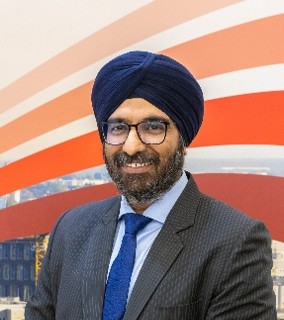
Jaspal SINGH
Senior Director
Membership & Global Operations
Canada
Jaspal Singh is a global mobility leader with over 20 years of experience spanning public transport, innovation, technology, and international business. He currently serves as Senior Director of Membership and Global Operations (MGO) at UITP (International Association of Public Transport), where he leads a global team of more than 32 professionals across 16 cities. In this role, he drives UITP’s global engagement strategy, strengthens international partnerships, and expands the association’s worldwide network to advance sustainable urban mobility.
Throughout his career, Jaspal has held several leadership positions at UITP, including Head of North America, Head of South Asia, and Manager of the IT and Innovation Committee. He was also part of Uber’s early journey, supporting regulatory engagement and strategic partnerships. His experience working with public transport authorities, operators, technology companies, startups, and consulting firms provides him with a unique 360-degree perspective on the evolving mobility ecosystem.
Passionate about innovation and entrepreneurship, Jaspal actively supports emerging mobility and autonomous transportation ventures as an advisor, mentor, and investor. He is the co-founder of Mobility Innovation Lab (MIL), a platform connecting startups, cities, and corporations to accelerate mobility innovation. He also hosts the Mobility Innovators Podcast, where he engages with global industry leaders, entrepreneurs, and policymakers shaping the future of transportation.
Recognized for his contributions to public transport and community service, Jaspal has received several awards and has been featured and quoted in industry publications. He holds a Master of Management Innovation and Entrepreneurship (MMIE) from Queen’s University, Canada, and a Master of Business Administration (MBA) specializing in International Business.
Lottie Stainer is the Transport and Urban Life Manager at UITP. She has a background in urban and spatial planning, working with private and public organisations within the realm of public space development, transport planning and stakeholder engagement. She is managing the Transport and Urban Life Committee, as well as research projects related to climate neutrality and road safety.
Poornima SINGH
Manager for Research and Membership Services, UITP Asia-Pacific Centre for Transport Excellence
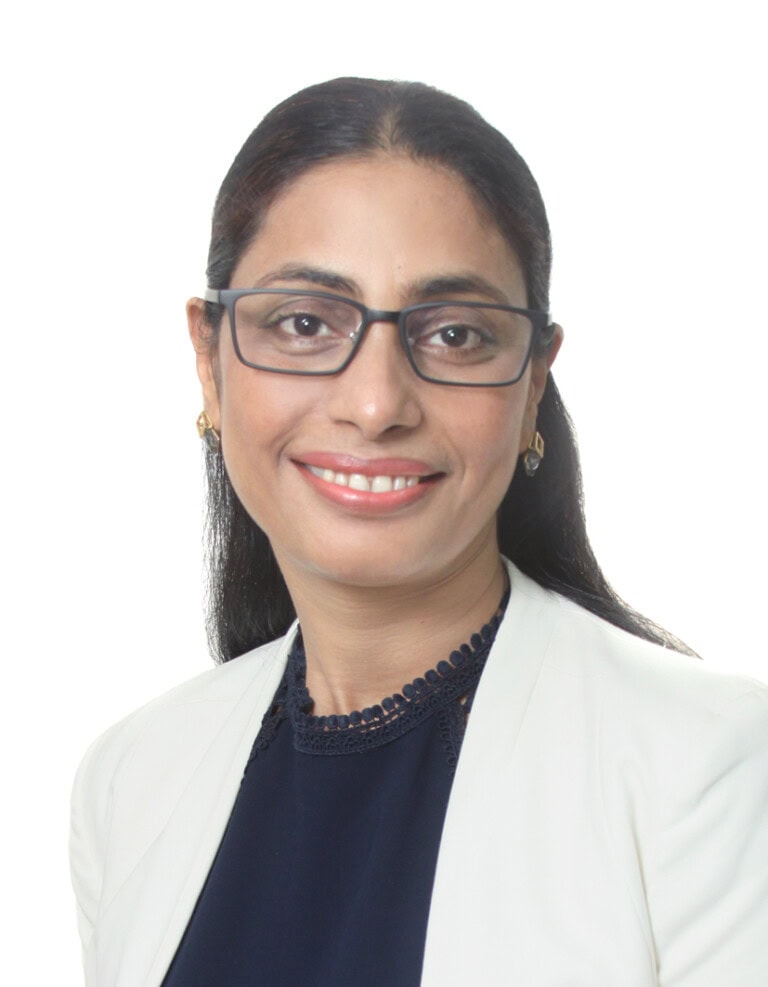
Poornima is the Manager for Research and Membership Services at UITP, working with the UITP Asia-Pacific team. With over nine years of experience in urban planning and public transport, she specialises in managing, leading, and coordinating high-impact projects.
At UITP, she oversees research initiatives at the Asia-Pacific Centre for Transport Excellence (CTE) in collaboration with Singapore’s Land Transport Authority (LTA), focusing on mobility innovation, inclusivity, governance, and sustainability. She also leads training programs, webinars, and strategic program management. Most recently, she wrapped up a CTE research project on the governance of on-demand mobility services. Additionally, she plays a key role in supporting UITP Asia-Pacific’s working bodies, engaging closely with transport authorities to advance public transport initiatives.
Before joining UITP, Poornima was a researcher at the National University of Singapore, where she contributed to projects on urban planning, climate resilience, smart cities, and sustainable mobility.
Sue Chan is the Head of UITP Australia and New Zealand, bringing over 17 years of senior management experience in the transport and consulting sectors. Before rejoining UITP, she served as the Chief Operating Officer at the Public Transport Association Australia New Zealand (PTAANZ). Prior to relocating to Australia, Sue held the position of Head of UITP Asia-Pacific for seven years, where she successfully managed the UITP Asia-Pacific Committee and its sub-committees. This role involved overseeing members from transport authorities, operators, and suppliers across 12 countries. During her tenure, she grew the Asia-Pacific office into the regional office with the largest number of members outside Europe.
Sue has developed strong, lasting relationships with key transportation operators, government authorities, international institutions, and universities across both the Asia-Pacific and ANZ regions. A seasoned professional, she excels at leading teams to deliver exceptional outcomes, particularly in policy and strategy development, business development, stakeholder engagement, and project management.
Earlier in her career, Sue held senior roles at several international transport consulting firms. She led teams of internal consultants and external contractors, successfully completing various global transport planning and traffic engineering projects. Fluent in six languages/dialects, including English, Chinese (Cantonese, Mandarin, and Hokkien), Malay, and Indonesian, Sue can navigate diverse cultural and business environments with ease.