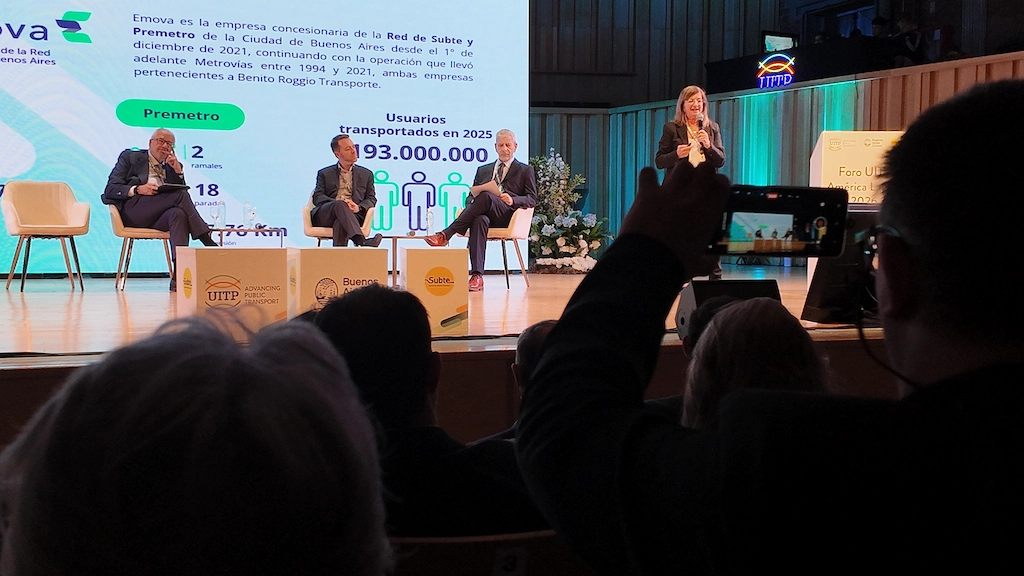
Hear from Ester Litovsky – Director of Strategic Planning, EMOVA

The UITP Latin America Forum 2026 gathered 350+ participants from 35+ countries in Buenos Aires. At the event, Argentina’s mobility leaders shared their insights with regional and global public transport professionals. That includes Ester Litovsky, the Director of Strategic Planning at EMOVA, one of the Forum’s Gold sponsors.
Hear from Ester about the present and future of mobility in Buenos Aires, the city’s most exciting projects, and the role of EMOVA to make it all happen.
What role does Subte have as a metro operator to help advance sustainable mobility in Buenos Aires?
The Buenos Aires metro is much more than just a mode of transport for the city. It is the backbone of urban mobility, complemented by other modes of transport that connect with it. It is essential to the city’s functioning and a strategic driver of its development.
The metro helps reduce travel times, facilitate access to employment, education and services, improve the health and well-being of residents, and foster a city that is more productive, competitive, integrated, equitable and sustainable.

What current/ongoing projects excite you right now as a public transport professional in Buenos Aires?
The existing Buenos Aires metro network is currently undergoing a modernisation process, which is essential considering that it was inaugurated in 1913, making it the first metro system in Latin America and the 13th in the world.
In addition, construction of a new metro line, Line F, is expected to begin soon. Digitalisation initiatives are also being implemented to enhance operational efficiency.
Furthermore, a new electric surface transport service, designed to serve as a feeder to the Subte network, is scheduled to begin operations in December this year. All these developments will significantly contribute to improving mobility throughout the City of Buenos Aires.
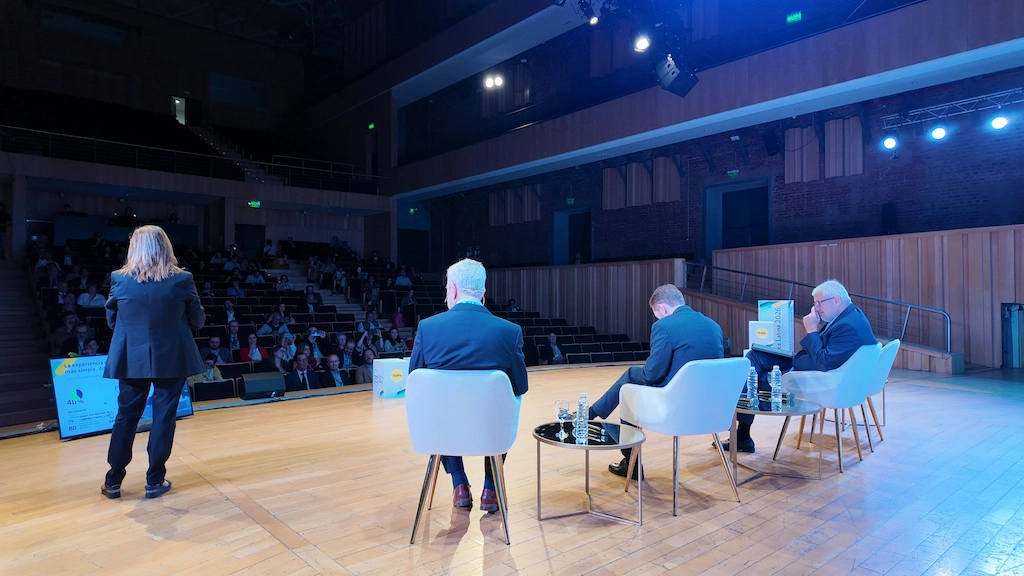
What insights/advice have you learnt in your position or time at UITP that you can share for others in roles like yours across the world?
One very important lesson I have learned from UITP’s studies, and one that we are now seeing confirmed in Buenos Aires, is that public transport demand is sensitive to fares, but even more sensitive to service quality.
Buenos Aires is currently experiencing a particularly interesting situation. In recent years, public transport has seen a widespread decline in demand.
This trend can be attributed to several factors: changes in mobility habits following the pandemic, such as working from home, e-commerce and online education; fare increases; lower levels of economic activity; and the growing use of motorcycles and mobility platforms such as Uber and similar services. All these factors have transformed mobility patterns.
Despite this overall trend, in 2026 the Buenos Aires metro has provided 5% more services than in 2025, while bus services have reduced over the same period. As a result, average weekday metro ridership between January and September 2026 declined by just 1% compared with the same period in 2025, whereas bus ridership fell by 12%.
That is why, building on what we have learned through UITP, our priority is to continue investing in reliability, frequency, service regularity, safety, comfort, passenger information and technological modernisation.
Above all, we must keep passengers at the heart of our decisions, with the aim of continuously improving their experience.