UITP Academy, in partnership with its Regional Training Centre EMT Madrid, is launching an online training programme on Sustainability in Public Transport between 17-27 November 2026. The course will span across 2 weeks including international case studies.
Sustainability in businesses and organizations around the world is increasingly requested by investors, governments, and customers.
Organisations are expected to comply with regulations and standards to disclose information on their impacts, risks and opportunities on the environment, the society and their governance, while integrating sustainability principles at the core of their strategic approach.
This requires dedicated teams and individuals coordinating the integration of sustainability principles within the organisation but also the contributions of all staff.
For this reason, an understanding of the context, how sustainability relates to public transport, and how it is deployed in an organization is paramount for any decision-making staff.
What You Will Learn
Understand the key elements of sustainability in public transport
Explain the fundamentals of sustainable financing
Develop and implement a sustainability strategy to ensure system’s long-term efficiency
Learning about Sustainable Development Goals and benchmarking with international best practices
Understanding how to design sustainable public transport system and cities
Get learned what are the climate risks and action plans
Who is it for?
Executives, managers, supervisors, and coordinators from public transport service providers
City governors, directors or managers from city authorities
Relevant staff from public transport operators, authorities or the manufacturer and stakeholders
Professionals interested in obtaining a wider and international perspective in resilience in public transport and eager to learn more from best practice worldwide
The course welcomes junior and senior professionals worldwide.
Sustainability has moved from policy rhetoric to contract terms, investor diligence and boardroom risk registers. This session cuts through the global framework to focus on what is actually driving commercial outcomes for public transport operators and authorities: tightening disclosure regimes (CSRD, ISSB, TCFD), ESG-weighted procurement, green finance conditions, and passenger and employer expectations.
From SDGs to revenue: translating the global agenda into contract KPIs and investor criteria
The regulatory landscape shaping PT contracts: CSRD, ISSB, TCFD, EU Taxonomy and national equivalents
ESG as a commercial filter: how financiers, authorities and clients are screening operators
Where sustainability is creating competitive advantage — and where it is exposing legacy operators to risk
End of Day 1
12:00–12:00
Session 2
Violeta PERAN, Civil Engineer and Mobility Expert, PERANNOVA, Croatia
Public transport is one of the largest single contributors to urban decarbonisation, social inclusion and economic productivity. This session reframes PT’s contribution in terms authorities, investors and passengers actually reward: avoided carbon, health and air quality benefits, agglomeration and labour market access, and social value measured in pounds, euros or dirhams. Delegates leave with a sharper articulation of their own organisation’s value proposition and the evidence base to defend it.
How to capture PT’s contribution: carbon, air quality, health, productivity and social value in financial terms
Building a credible narrative for authorities, funders and passengers — beyond modal share statistics
Positioning PT against active and shared mobility: complement, competition or integrated offer
Workforce as a commercial asset: attracting and retaining talent in a constrained labour market
Where UITP data, benchmarks and tools strengthen the case
Case Study
11:00–12:00
End of Day 2
12:00–12:00
Session 3
Rachel HUGHES, Director, Surbon Consulting, UK and UAE, United Kingdom
Sustainability reporting is no longer a communications exercise — it is a gateway to finance, a precondition of bidding, and an increasingly audited legal obligation. Operators and authorities that report well access cheaper capital, pre-qualify for more contracts and reduce the cost of responding to investor and procurement information requests. Those that report poorly — or inconsistently across finance, operations and bid teams — face capital constraints, failed bid submissions and, under CSRD and equivalent regimes, regulatory exposure.
This session covers what to report, to whom, and how to use the right tools — from carbon accounting platforms and ESG data systems to AI-enabled reporting and bid assembly — to make the cycle pay back the effort it takes to run.
The reporting landscape operators must navigate: CSRD, ISSB, GRI, TCFD, EU Taxonomy and national equivalents
The operator’s reporting toolkit: carbon accounting platforms
Using AI effectively and safely: automating data collection, draft narrative, gap analysis and evidence retrieval — while managing hallucination, data leakage and audit risk
Assurance-ready data: building reporting on systems auditors, lenders and bid evaluators will accept
Integrating reporting with finance and strategy — ending the disconnect between ESG reports and annual accounts
Scope 3 and supply chain: where most PT emissions sit, and where most reporting failures happen
End of Day 3
12:00–12:00
Session 4
Violeta PERAN, Civil Engineer and Mobility Expert, PERANNOVA, Croatia
Climate events significantly impact public transport systems in various ways, affecting infrastructure, facilities, operations, and balance sheet. Extreme weather events such as hurricanes, rainfall, and high winds damage roads, bridges, railways, and stations. Flooding can lead to erosion, weakening the foundations of these structures and requiring costly repairs or replacements.
Climate events pose significant challenges to public transport systems, requiring robust adaptation and resilience strategies to ensure safety, reliability, and sustainability.
Quantifying physical and transition risk: asset exposure, service disruption cost and revenue-at-risk
UITP Climate Change adaptation framework – Prioritising adaptation spend where it delivers operational and commercial return
Meeting disclosure obligations under TCFD, ISSB and emerging national regimes
Resilience as a bid and financing asset: how lenders, insurers and authorities are scoring it
Designing adaptation into network planning, asset management and capital investment
Case studies: heatwave, flood and extreme weather response across bus, rail and metro operators
Case study on how to quantify climate risks
Case Study
11:00–12:00
End of Day 4
12:00–12:00
Session 5
Rachel HUGHES, Director, Surbon Consulting, UK and UAE, United Kingdom
Operator margins are increasingly set by workforce economics: driver and engineer shortages are limiting service delivery, while transport authorities are writing workforce commitments into contract award criteria and concession extensions. At the same time, the social pillar of ESG — once a soft topic — now carries hard commercial consequences through pay ratio disclosure, modern slavery reporting and supplier audit expectations. This session treats workforce as what it is: one of the largest cost lines and one of the most scrutinised dimensions of operator performance.
The commercial case for workforce investment: turnover cost, absence, recruitment lead time and service reliability
Social value in contracts: translating apprenticeships, local hiring and fair work commitments into measurable commitments
Diversity, inclusion and pay equity under disclosure regimes (CSRD social standards, UK gender and ethnicity pay reporting, equivalents in GCC and EU)
Modern slavery, labour standards and supply chain scrutiny: reporting obligations and audit expectations
Health, safety and wellbeing as operational risk management
Embedding sustainability behaviour at the front line: how operators actually shift driver, depot and engineering practice at scale
Session 6
Christian PRIEMER, Head of Sustainability Management, Hamburger Hochbahn
Finance conditions now reward sustainability performance and punish its absence. Green bonds, sustainability-linked loans, transition finance, concessional MDB lending and blended structures are actively reshaping the cost of capital for operators, authorities and PPP vehicles — with pricing, tenor and grace periods visibly better for credible issuers. At the same time, taxonomy alignment, use-of-proceeds reporting and Paris Agreement compatibility checks have become standard diligence items, and failing them can close funding doors entirely.
This session translates the sustainable finance landscape into practical decisions for operators and authorities: which instruments suit which assets, what evidence lenders and investors actually require, and how to structure a credible funding strategy that draws on the full toolkit.
Funding versus financing: getting the commercial framing right before approaching the market
The sustainable finance toolkit: green bonds, sustainability-linked loans, transition finance, concessional and blended structures
MDB and development bank routes (EIB, EBRD, ADB, AIIB, IsDB, World Bank, AfDB): eligibility, conditions and what they fund in transport
Creditworthiness, credit ratings and the evidence base that drives pricing and tenor
Green bonds in practice: taxonomy alignment, use-of-proceeds reporting and lessons from Paris, London and emerging-market issuers
Leasing, ROSCos and PPP structures — and when sustainability conditions apply to each
Case studies across bus, rail and metro: what worked, what did not, and why
End of Day 5
12:00–12:00
Session 7
Rachel HUGHES, Director, Surbon Consulting, UK and UAE, United Kingdom
Procurement is where sustainability commitments either become real or quietly fail. Scope 3 emissions, social value, modern slavery exposure and circularity outcomes are determined by specifications written months before contract signature — yet procurement teams are often under-resourced for the job. With the Procurement Act 2023, PPN 06/20, EU Green Public Procurement criteria and GCC in-country value frameworks all raising the bar, this session treats procurement as the strategic lever it is: how to specify, evaluate and contract for measurable sustainability outcomes without inflating price or legal risk.
The regulatory landscape: Procurement Act 2023, PPN 06/20, EU GPP and GCC in-country value frameworks
Specifications that drive outcomes: whole-life cost, whole-life carbon, circularity and social value embedded in the ITT
Evaluation and weighting: scoring sustainability credibly without opening legal challenge risk
Contract conditions and KPIs: turning supplier commitments into enforceable delivery
Supply chain due diligence: modern slavery, labour standards and Scope 3 reporting
Avoiding the common failure modes: greenwash, unverifiable claims and specifications that collapse under scrutiny
Session 8
Violeta PERAN, Civil Engineer and Mobility Expert, PERANNOVA, Croatia
Transit-oriented development (TOD) and mobility integration are no longer planning concepts — they are revenue and funding instruments. Operators and authorities that shape development around transit access unlock land value capture, densify ridership catchments, reduce per-passenger cost of service, and give authorities a credible route to fund infrastructure without raising fares or general taxation. Those that don’t, build expensive systems that run half-empty past low-density sprawl.
This session covers the commercial mechanics of TOD, the MaaS and shared-mobility layer that completes the ecosystem, and the governance and regulatory conditions that make integrated planning work in practice — drawing on experience from the UK, Europe and the GCC.
TOD as a commercial lever: the ITDP 8 principles and the move from planning concept to revenue instrument
Land value capture in practice: development rights, betterment levies, joint development and station-area uplift
Integrated authority models: why fragmented transport and planning governance kills TOD, and how leading cities fix it
MaaS and shared mobility as the first- and last-mile layer: complement, competitor or integrated offer
Using data, modelling and AI to size catchments, price development rights and stress-test ridership cases
End of Day 6
12:00–12:00
Session 9
Christian PRIEMER, Head of Sustainability Management, Hamburger Hochbahn
Strategy, policy and implementation
Transition to zero emission vehicles
Alternative fuels and renewable energies
Case Study
11:00–12:00
End of Day 7
12:00–12:00
Session 10
Rachel HUGHES, Director, Surbon Consulting, UK and UAE, United Kingdom
Opex accounts for the majority of whole-life cost in any public transport system, and it is the phase where sustainability commitments are either delivered or quietly abandoned. Energy consumption, maintenance regimes, spare parts strategies and depot operations between them determine whether an operator hits its decarbonisation targets, meets its contract KPIs and protects its margin — or reports numbers that unravel under audit. This session focuses on the operational decisions that move the commercial and sustainability dials at the same time, and on the maintenance disciplines that keep performance credible over the life of the contract.
Energy management as a margin lever: traction energy, depot power, regenerative braking and tariff optimisation
Predictive and condition-based maintenance: reducing cost, extending asset life and cutting whole-life carbon
Spare parts, remanufacture and second-life components — closing the loop between procurement and operations
Water, waste and depot emissions: the operational detail that audits and ESG ratings now reach into
Data, telemetry and AI-enabled operations: turning fleet and asset data into continuous efficiency gains
Sustaining performance across the contract: evidence, KPI reporting and handover readiness
Conclusion
11:30–12:00
End of training programme
12:00–12:00
*UITP reserves the right to make amendments to the programme or any related activity at its discretion
A Top Level Methodology
Get inspired by our trainers, understand the main concepts and learn from successful best practice
Participate in interactive plenary sessions with introductions by course leaders, presentations by trainers and open discussions with participants
Challenge your practical knowledge on resilience, climate change, disasters and business continuity
Address the topic from an international perspective, enriched by different cultural approaches and points of views
Participate to practical exercises and case studies and local context
Benefit from a unique exchange of knowledge and experience between professionals
UITP Training Programmes and all related processes are certified for ISO 21001: 2018 – the standard for Educational organisations – Management systems for educational organisations.
All UITP trainers are top level transport and mobility professionals with extensive experience in public transport and operations from different regions of the world. In addition, UITP invites guest speakers to illustrate specific solutions, practices and case studies.
Rachel HUGHES
Director
Surbon Consulting, UK and UAE
United Kingdom
Rachel has a BA (Hons) in Geography from University of Oxford and holds the inaugural Masters in Carbon Management from University of Edinburgh Business School. She is a Fellow of the Chartered Institute of Logistics and Transport.
Since graduating from Oxford, Rachel worked as a consultant beginning her career as a transport planner with WSP then worked for a start-up advising companies in the transport sector on how to reduce their carbon emissions. She then set up her own firm (Surbon Consulting) in the UK supporting transport operators such as Keolis, Go-Ahead, Serco and MTR on business development and contract mobilisation covering contract management, sustainability and customer experience. She has worked across all modes of transport: rail, metro, bus, ferry and cycle hire and more recently electric scooters. She set up a UAE branch of Surbon Consulting in 2017 and has delivered work in UAE, Qatar and Saudi.
She has been a member of UITP since 2015 and has found the conferencing and training courses offered by UITP extremely valuable. She has been an UITP trainer delivering training to TGA (Saudi), RTA (Dubai) and LTA (Singapore).
Violeta PERAN
Civil Engineer and Mobility Expert
PERANNOVA
Croatia
Violeta Peran is a civil engineer and mobility expert with over 15 years of international experience in transport planning, public transport systems, and territorial development. She is the founder of PERANNOVA, a consultancy focused on sustainable mobility, transport planning, and strategic development of cities and regions. Throughout her career, she has worked with cities, regions, and public transport operators across Europe on mobility strategies, transport models, feasibility studies, and EU-funded projects. Her work often looks at mobility in the broader context of how people live, move, and access services, considering urban, rural, and remote areas alike. Violeta is particularly interested in how transport systems can evolve to better support everyday life, helping people reach work, education, healthcare, and public spaces while contributing to climate goals and more balanced territorial development. She is actively involved in European research and innovation initiatives, including programmes such as Horizon Europe and EIT Urban Mobility, contributing to projects focused on climate-neutral mobility and more resilient transport systems. As a trainer and advisor, she brings practical experience from real projects and works closely with cities and organisations seeking to turn sustainability goals into practical and workable mobility solutions.
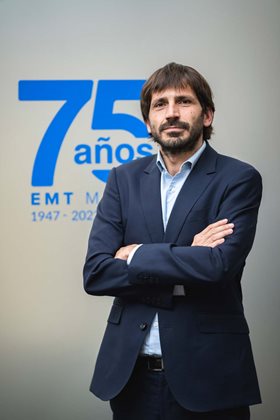
Gonzalo FERNÁNDEZ
Infrastructure Director
EMT Madrid
Spain
Gonzalo FERNÁNDEZ Infrastructure Director PhD. MSc. Civil Engineer. He is an expert in sustainability project management and low carbon technologies. He has collaborated in several international congresses and conferences, national and international R&D projects, has published in different scientific and technical journals and is part of different scientific committees related with sustainable infrastructures and urban planning. He is vicechair of the Sustainable Development Committee and currently leading the UITP working group on Renewable energy and energy transition in public transport. He is currently the Infrastructure’s Director of EMT Madrid
Christian PRIEMER
Head of Sustainability Management
Hamburger Hochbahn AG
Germany
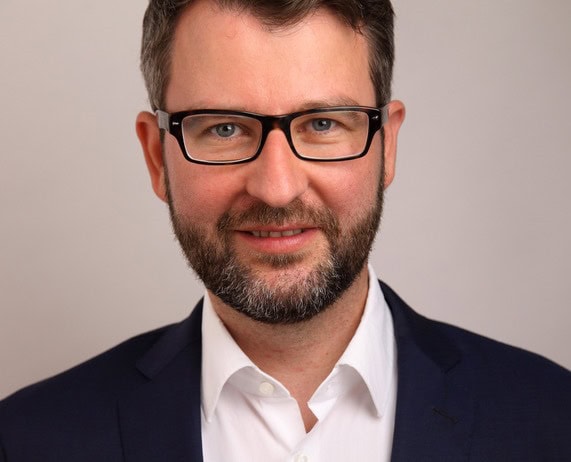
Christian Priemer, Head of Sustainability Management in the Department of Finance and Sustainability at Hamburger Hochbahn AG. He studied civil engineering at the Leibniz University of Hanover, specializing in transport management, completed his doctorate in the field of Intelligent Transportation Systems and successfully completed an international MBA with a focus on corporate management while working. After various positions in the company as a project manager and advisor to the Board Member for Human Resources and Operations and the Board Member for Technology, he has successfully established and developed sustainability management at Hamburger Hochbahn AG since 2017. In his spare time, he coaches a U12 football team.
Katarina JONERHOLM
Environmental strategist
Trafikförvaltningen, Region Stockholm
Sweden
Katarina Jonerholm is an Environmental Strategist with extensive experience across a wide range of environmental and sustainability topics. Her expertise spans climate mitigation and environmental considerations in infrastructure planning, development and operations, climate adaptation, environmental requirements in construction projects, waste management, sustainable procurement, and environmental management systems. Working more than a decade at Region Stockholm’s Public Transport Administration, Katarina plays a key role in developing and improving the organisation’s environmental management framework, strengthening environmental governance, as well as translating strategic objectives into practical requirements and processes in studies, investments, procurements and operational activities. Her current focus is on climate calculations and detailing climate targets at an organisational level, developing a climate mitigation plan for Stockholm PTA spanning across all Scopes of the carbon emissions, as well as climate adaptation and climate risk assessment of the technical infrastructure assets. With a background that includes environmental consultancy and project support within major infrastructure projects, she combines strategic thinking with practical implementation. Her work involves close collaboration with project teams, suppliers, contractors, consultants, and external stakeholders to drive environmental performance and reduce climate impact.
Practical Information
Contact Us
Have a question? Contact our team if you need any additional information on this event.
Alya DEVECEL
Assistant – UITP Academy Unit • Events and Academy Services