
The journey to greener ports: looking back at five years of PIONEERS
Ports are rarely quiet. Ships come and go, cranes lift cargo, and machinery keeps terminals running. Beyond the docks, there’s another constant flow of movement: employees heading to work, cruise passengers arriving by the thousands and transport services connecting port areas with nearby cities.
All this activity has an environmental impact. Reducing it means looking at everything from energy supplies and equipment to the way goods and people move.
Between 2021 and 2026, the EU-funded PIONEERS project explored how European ports could become more sustainable without compromising their competitiveness. Now, with the project concluded, its findings offer other ports a chance to build on what has been tested and learned.
Four European ports, 19 demonstrations
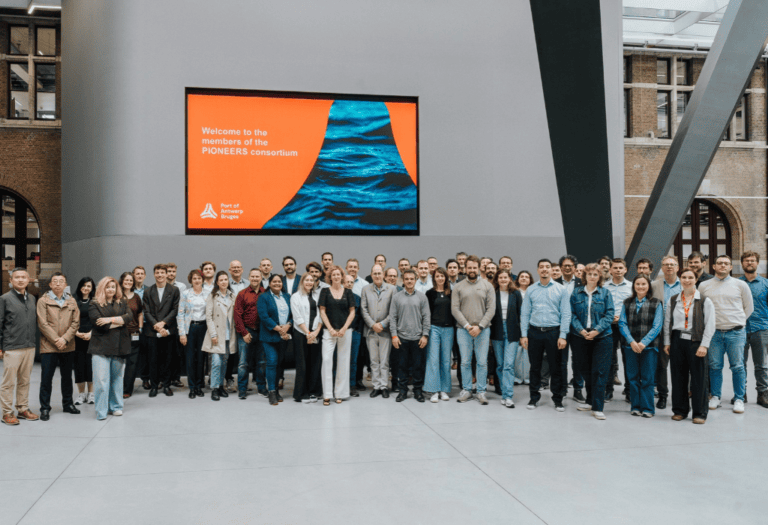
Coordinated by the Port of Antwerp-Bruges, PIONEERS brought together the ports of Barcelona, Constanța and Venlo, alongside businesses, research institutions, technology providers and public authorities.
Over five years, the consortium carried out 19 demonstrations in real port environments. They covered four areas: clean energy production and supply, sustainable port design, modal shift and flow optimisation, and digital transformation.
The solutions ranged from hydrogen applications and cleaner port vehicles to digital tools for monitoring emissions and improving operations.
PIONEERS also wanted its findings to reach beyond the four participating ports. Drawing on its Academy expertise, UITP contributed to a dedicated training programme that helped interested professionals understand the demonstrations: why they were developed, what challenges arose and how similar solutions could be adapted elsewhere.
Being part of the project also gave UITP members an opportunity to learn from leading European ports the connection between their activity and public transport. From the daily commute of port employees to the potential of Mobility as a Service (MaaS) applications for cruise passengers, two activities in Antwerp and Barcelona explored how people travel to and from ports, each from a different perspective.
Antwerp: rethinking the daily commute
For employees in a sprawling port area, getting to work without a car can be a challenge. Some workplaces are far from residential neighbourhoods, while public transport connections or cycling routes may not suit particular shifts.
Antwerp had already been addressing commuting habits through Smart Ways to Antwerp, launched by the city in 2016. Originally developed in response to major roadworks and disruption, the programme gradually became part of a broader effort to encourage sustainable travel.
PIONEERS provided an opportunity to extend its reach into the port area. With support from the Port of Antwerp-Bruges, the city reached more companies in the port area, learned how their employees travelled to work and explored ways to encourage other ways of commuting.
Workers could try bicycles, electric bikes and different public transport services before committing to a change. Employers received mobility assessments and guidance, while a multimodal journey planner made it easier to compare routes.
After the trials, more than half of survey respondents said they had considered buying a bicycle for their commute.
The involvement of employers was particularly useful. Their understanding of staff travel patterns and workplace accessibility helped the city identify where changes could make the greatest difference.
And the approach travelled all the way to Romania! At the port of Constanța, a survey adapted from Antwerp’s model found that 70% of port staff commuted by car. The findings helped the port authority develop a plan to reduce emissions from employee commuting.
Barcelona: helping cruise passengers reach the city
Imagine arriving at a cruise terminal in Barcelona, ready to explore the city. Taxis are waiting outside, but there’s also a shuttle bus connecting the port with the city. The trouble is, when you open your mobility app, the shuttle may not appear.
This was one of the issues identified during PIONEERS’ study at the Port of Barcelona, which examined how Mobility as a Service (MaaS) could help cruise passengers find and combine different transport modes.
During the Transport Research Arena 2026, UITP spoke with Max Zañartu, Mobility Projects Technician at RACC, about the findings. As Max explained, “not all cruise tourists are the same.”
Stopover passengers were the largest group of cruise visitors in Barcelona in 2023. While many joined organised excursions, those exploring the city independently needed to find their own way to find a public transport connection.
But would a dedicated MaaS app be the answer? The study found several obstacles, including limited real-time data from shuttle services and the excursions already promoted by cruise companies. Adapting existing mobility or cruise-line apps to include transport options and information about attractions emerged as a more practical approach.
Watch our full interview with Max Zañartu to hear more about the Barcelona study!
What do these experiences tell us about ports and public transport?
Ports may not be responsible for organising public transport, but they can help cities and operators better understand the journeys people make to and from them, and where improvements to services, infrastructure or travel information are needed.
Our latest PIONEERS Project Insights publication takes a closer look at the findings from Antwerp and Barcelona.
What PIONEERS leaves behind
Beyond its 19 demonstrations, PIONEERS developed four Green Port Master Plans, drawing on the experience of its partner ports to help them plan their transition towards climate neutrality.
These findings have also fed into the free Green Port Master Plan Handbook Explorer. Through five steps, the handbook guides ports from assessing their current environmental footprint to defining a vision for 2050, examining external pressures, exploring relevant innovations and preparing a roadmap.
The PIONEERS Transition Platform brings these resources together with a carbon-footprint methodology, a tool for identifying barriers to change and a showcase of all 19 demonstrations.
And now, ports around the world have access to these resources and knowledge, allowing them to explore possible solutions suited to their own environments.