An online training on Ticketing and Fare Management in partnership with LTA Academy
UITP Academy, in partnership with LTA Academy, is launching an online course on Ticketing and Fare Management starting on 12 July and ending on 19 July 2023. The course will feature 9 interactive online sessions and international case studies.
Ticketing is the key for public transport operators or authority to collect fare from the passengers.
Nowadays, the increasing use of technology supports the need of various fare types, payment method transforming from classic paper tickets to contactless cards and smart phones, while opening up endless opportunities for data collection and analysis.
The challenge starts with trying to understand about closed-loop vs open-loop, card-centric vs system-centric, prepaid vs post-paid, account-based ticketing, open payment, SIM-centric mobile ticketing, Secure Element, HCE, interoperability, multiservice, beacons, NFC, QR code… and so on.
Reach your objectives
With the aim to improve operational efficiency and adapt to new challenges in fare management and ticketing, the course aims at:
Understand, analyse and discuss available ticketing systems and fare management trends
Giving a worldwide overview of practices and solutions in ticketing
Lay the basis of tariff structures, pricing, and fare policy, essential to the design of a ticketing solution
Detailing the different technologies and solutions on the market
Discuss the opportunities created by account-based and mobile ticketing and learn from practice on their implementation
Methodology
Getting inspired by trainers, understanding the main aspects of ticketing and fare management systems
Participate to interactive plenary sessions with introduction by course leaders, presentation by the trainer and open discussion with participants
Challenge your practical knowledge on ticketing and fare management
Address the topic from an international perspective, enriched by different cultural approaches and points of views
Participate to practical exercises and case studies
Benefit from a unique exchange of knowledge and experience between professionals
Exchange experiences and discuss key topics during workshops in smaller groups
UITP Training Programmes and all related processes are certified for ISO29990:2010 – the standard for learning services for non-formal education and training.
Who is it for?
Target audience:
Staff from public transport operators or authorities responsible for the ticketing systems
Staff from the industry worldwide involved in the market uptake in this area: ITS companies, app-developers, software compilers
Professionals from operations, engineering, finance departments
Professionals interested in obtaining a wider and international perspective on ticketing and fare management and eager to learn more from best practice worldwide
A good level of English is a compulsory requirement to attend the training.
Why choose an online course?
Interact with wide community of public transport professionals from across the world
Be time efficient, with 9 sessions over a 2-week timespan
Flexibility to join the sessions from any location in the world, at work or at home
Inspiring trainers
All UITP trainers are top level transport and mobility professionals with extensive experience in public transport and operations from different regions of the world. In addition, UITP invites guest speakers to illustrate specific solutions, practices and case studies.
Automated Fare Collection Systems, Smart Card Systems
Advantages and disadvantages
Open or closed systems
Examples of check-in systems and check-in/check-out systems
NFC, EMV, ID-based ticketing
Account Based Ticketing, blockchain, mobile
Interoperability / cross country / exchange rate etc.
Ticketing Alliances
Examples worldwide, including Octopus in Hong Kong (suggest this to be a separate session including covering Japanese Suica and Korean T-Money)
Session 1B: Singapore’s Integrated Ticketing and Fare System
09:30–10:30
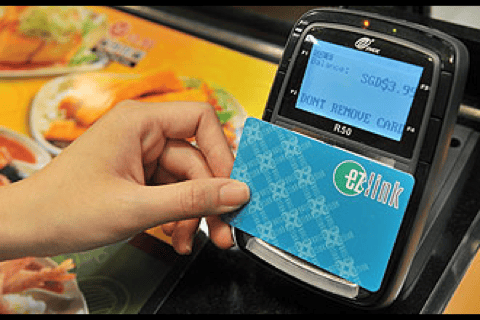
Session 2: Digital Transformation Journey of a Transportation Card – EZ-Link’s experience in Singapore
10:30–11:15
Solutions can be applicable for different infrastructure and size of agencies, which are presented with some case studies all around the globe.
Fundamental objectives of fare collection
Tariff structures, product range, fare levels, payment media
Strategic issues, regulatory and Institutional frameworks
Cost Coverage Ratio, Compensation and concessionary fares, Subvention, Funding Alternatives
Setting Fare Principles, Price Setting, Affordability, Equity, Fare Elasticity
Fare Adjustment Mechanisms, Fare Adjustment Formula
Ticket & Fare integration, Revenue Distribution
Fare Products, Fare capping, Frequency-based discounts, Mileage service, Sales channels incentives, Time-of-day pricing, Minus ride system
Fare avoidance and fare evasion (Can be a separate session covering different types of fare avoidance and evasion, and strategies to control them; psychology of fare evasion; revenue control mechanisms)
Session 4B: Case Study from Turkey
10:30–11:15
Mobile barcode ticketing
Enhancing existing ticketing systems
Lifting customer communication to a new level
With more and more uptake of contactless bank payment transactions, there is massive opportunity to support open loop transactions in Public Transport. The National Transit Card will be a white-labelled contactless bank card which means that any EMV-capable ticketing validator will be able to read it
This enables “bring your own token” to travellers removing the significant barrier or having to buy cards, top up cards, etc.
More than 80% of New Zealanders already carry a contactless bank card
Concept of Account-based Ticketing
Advantages of account-based ticketing (system/infrastructure design; operational advantage and customer service advantages)
ABT as a way to enhance revenue yield from customers while providing more fulfilment to their lifestyle (a Customer relationship management CRM tool)
Current practices around the world
Migrating from a traditional ticketing to ABT
Pricing theory
Pricing of alternative modes of transport (best practices)
Pricing for non-public transport modes: a comparative analysis
Communication and marketing of pricing
Fare Policy can have a dramatic impact on growing public transport patronage in any region in the world. The outline as below:
Fundamental objectives of fare collection
Tariff structures, product range, fare levels, payment medium
Strategic issues, regulatory and Institutional frameworks
Cost Coverage Ratio, Compensation and concessionary fares, Subvention, Funding Alternatives
Ticket & Fare integration, Revenue Distribution
How fares can directly impact patronage
Are “free fares” really the answer?
Fare simplification – the move towards intuitive fares
Session 9: Case Study on Contactless Ticketing
10:45–11:30
Wrap Up & Closure
11:30–11:45
Trainers
Sven ROSENBERG
VP of Sales regions Nordics, NA & ANZ
Ridango AS
Estonia
Experienced business development professional with a demonstrated history of working in the information technology and services industry. Skilled in Negotiation, Business Planning, Sales, Management, and Account Management. Sven graduated from Tallinn University of Technology with a Bachelor in Business Administration and has worked for Ridango AS since February 2017.
Angela KHOO
Director, Policy & Regulation
Public Transport Council (PTC)
Singapore
Angela is the Director, Policy & Regulation at the Public Transport Council (PTC) of Singapore. Her current portfolio includes (i) Policy and regulation on public transport fares and ticket payment services, and (ii) Penalty fee regulations on fare evasion. Currently, Angela serves as the Vice Chairperson for the UITP Transport Economics Committee for 2021-2023. Her previous work experiences include corporate planning, Enterprise Risk Management (ERM), bus policies, foreign vehicle usage policies, toll operations at the land checkpoints, research and surveys.
Silvester PRAKASAM
Senior Advisor, Digital Mobility Solutions
MSI Global Pte Ltd
Singapore
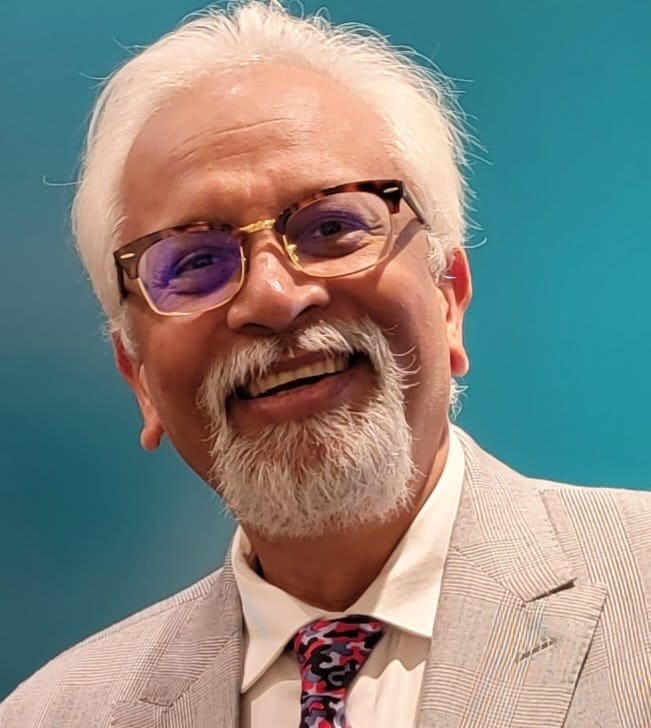
Silvester Prakasam has been heading the Fare System for Public Transport for Singapore from 1989 to 2017 and subsequently appointed as Senior Advisor.
The Fare System team under Silvester has undertaken several ticketing initiatives, including the Integrated Ticketing System which provided a common fare structure for the entire public transport network in Singapore.
In 1998, he was appointed Project Director for the Enhanced Integrated Fare System project to implement a common smart card system across the public transport network at a total cost of US$200m and completed in 2002. 10 million cards were issued.
Subsequently he led a team that implemented an open system to merge payments for Public Transport and congestion pricing. A new standard for e-purse, called CEPAS, based on microprocessor cards was developed in partnership with leading card suppliers. The system known as SeP (Symphony for e-Payments) was launched in January 2009 and successfully cut-over on 1st October 2009.
His team then went on to introduce a new fare structure called Distance Fares (DF) which was launched in July 2010 and 5.7m trips are made daily on the system.
He continued to be involved in new initiatives and, specifically, Account-Based Ticketing which was launched in April 2019. He is also actively engaged in MSI Global delivering ticketing projects overseas including Doha, Bangalore, Bangkok and Manila.
Inanc KARABULUT
Market Research Specialist
Kentkart
Türkiye
Inanc Karabulut is a professional in the field of Market Research at Kentkart. He holds a master’s degree in Strategic Marketing and Brand Management. His Sales and Marketing background enables him to conduct market research activities and allows to provide valuable insights and strategic solutions to propel business growth and success.
Chen Way has spent close to a decade in the tech industry, with the recent seven years focused on the payments industry. He is part of the consumer payments partnerships team for Google, responsible for financial institutions, payment networks and transit partnerships within Asia Pacific, with a focus on the Southeast Asia region. Based out of Singapore, he recently led the cross-functional efforts for the November 2022 launch of Google Wallet in Malaysia and Vietnam.
Ben FERNANDEZ
Director
TranzPayments Consulting
New Zealand
Ben has worked at the forefront of public transport ticketing for over 10 years. He has consulted to Auckland Transport on a major upgrade to the AT HOP system, the Department of Transport in Melbourne on a major ticketing procurement project, and Waka Kotahi the New Zealand Transport Agency on the procurement and implementation of a new national public transport ticketing solution.
Andrea SÖHNCHEN
Managerin
UITP
Belgium
Kah Wai TIAN
Head of Strategy
EZ-Link Pte Ltd
Singapore
Experienced Head Of Solutions with a demonstrated history of working in the financial services industry. Skilled in Business Planning, Product Development, Product Management, Pre-Sales Consultancy and Business Development. Strong information technology professional with a Bachelor of Commerce (BCom) focused in Finance, General from University of Melbourne.
Alok JAIN
CEO & Managing Director
Trans-Consult Ltd.
Hong Kong SAR, China
Alok is the CEO & Managing Director of Trans-consult. He is an international expert in public transport operations and management, with specialisation in new technology, artificial intelligence, data analytics, and clean fuel technologies. With 30 years of experience in the industry, Alok has worked with an array of international consultants and leading transport operators such as MTR Corporation Hong Kong and Kowloon Motor Bus Hong Kong.
He is an international expert trainer and a Fellow of Civic Exchange, a Hong Kong-based non-profit independent think tank. He regularly teaches at the University of Hong Kong and serves as a Member of the Transport Policy Committee of the Chartered Institute of Logistics and Transport in Hong Kong. He has several publications to his credit, including contribution to a book on best practice in railways operations and management.
Alok is a civil engineer and holds post-graduate degrees in transportation engineering and management.